Sopockin, Belarus
Sopockin (also spelled Sopotkin, Sopotskin, and many other variants) is a small town approximately 25 kilometers northwest of Grodno, in what is today Belarus. It was home to a Jewish community from at least the early seventeenth century until the Holocaust. The pages that follow document that community’s history through two World Wars, the destruction of 1941–1943, and the records and memories that survive.
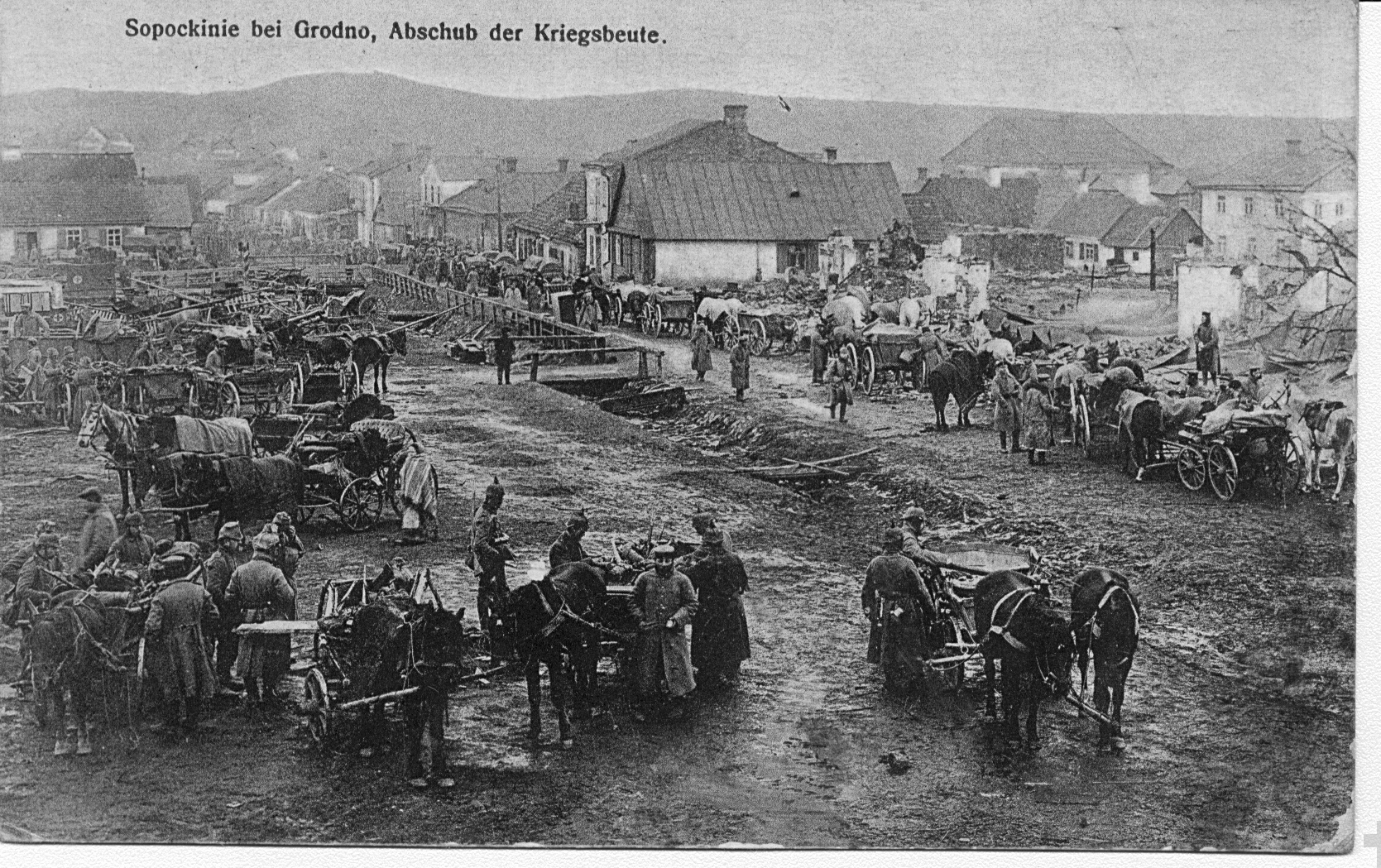
Sopockin, Belarus: World War I
.jpg)
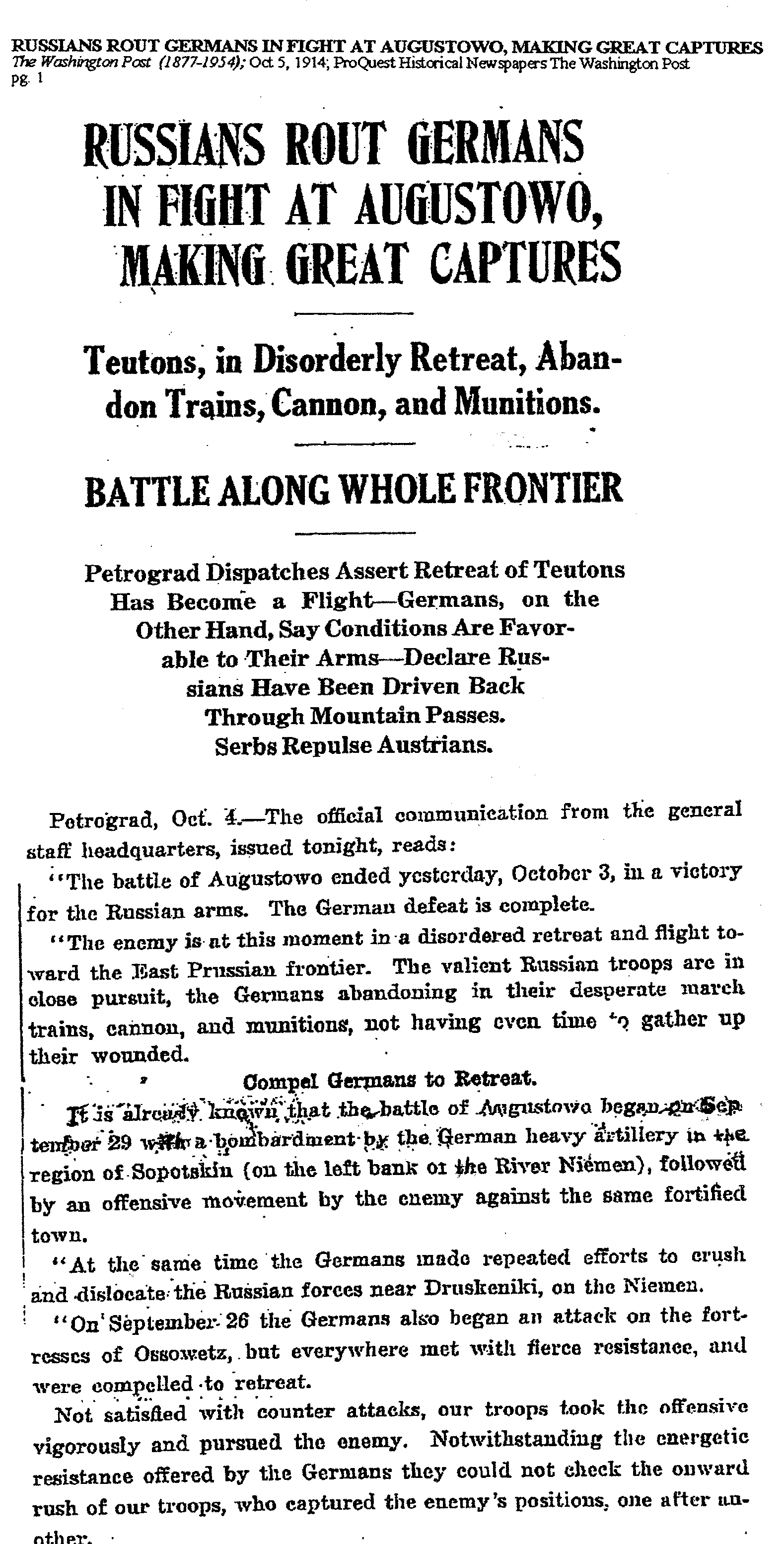
German Occupation of Sopockin
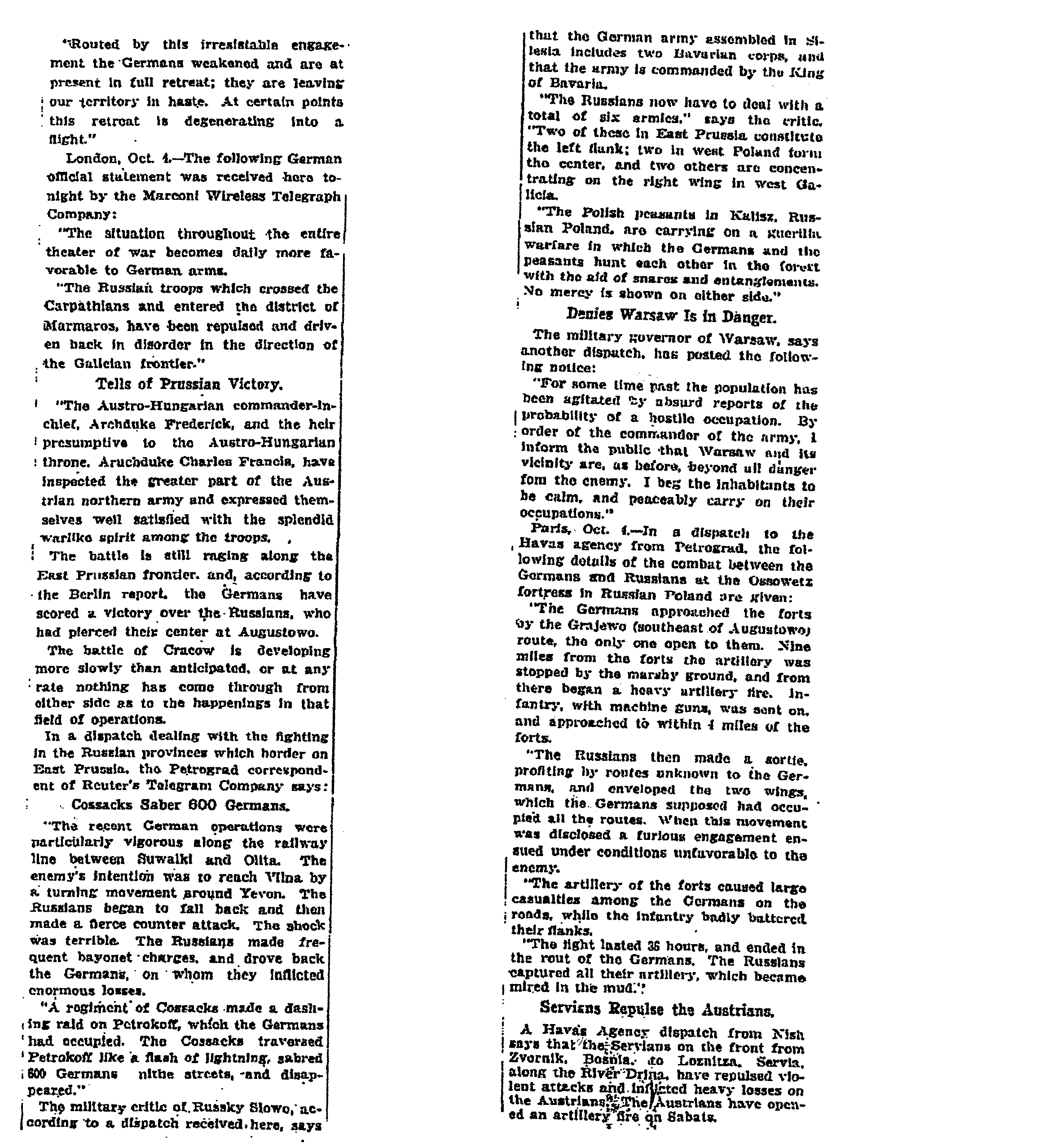
October 5, 1914
Community History
The following historical overview is drawn from the Pinkas Hakehilot — Ledger of the Communities: Poland, Vol. IV, ed. 1989, written by Abraham Wein.
Sopotkin
The first refugees arrived at Sopotkin and they related that young men face mortal danger from the advancing Germans and therefore they have to escape. Consequently, many Jewish young people left Sopotkin and headed to Warsaw. Some of them were killed on the way while others returned to Sopotkin at the end of the battle.
Sopotkin was conquered by the German Army in the first week of the war. In October 1939 it was annexed to “Btzirk Tzikhnau.” Immediately after the occupation, the Germans began abducting Jewish men ages 16–60 for a variety of forced labor such as cleaning the town, paving of roads, demolishing of houses, and various field and farm work.
One day, in Sept. 1939, the local Germans concentrated all the local Jews at the center of town, took from them their keys and robbed them. Afterwards they returned the keys to their owners and released their Jewish neighbors. At that time the Jews were forced to cut their beards and side locks. At the end of 1939, or the beginning of 1940, the Germans demolished the synagogue and the houses of Jews in the center of town. The inhabitants of these houses who remained with nothing, were dispersed as they found other places to live in Sopotkin.
The Jews were not allowed to leave Sopotkin without a special permit. A number of times the authorities demanded of them to pay “fines.” In Sopotkin there was no ghetto. In the end of 1940 there were in Sopotkin 90 Jewish families; among them there were 18 refugee families. They didn’t have any sources of income so they subsisted on the selling of the few belongings they had. The need grew daily. In Sopotkin there was no Judenrat neither was there any other Jewish institute to look after the needy. In 1940 Chaim Djialdov approached the joint branch in Warsaw for displaced Jews. The Germans forwarded their request to the community rabbi, Rabbi Chaim Glatshtein.
On Yom Kippur 5701, at dawn, a group of Sopotkin men arrived at Sopotkin. They assembled all the town Jews in a lot that was created by the demolished houses. The Germans demanded of the Jews to give them all their money and all their valuables. Then, they transported all the Jews (300–350) in trucks to the Camp Pumyahovek, which was erected in the former Polish fortress. In Pumyahovek, the Sopotkin Jews stayed 5 weeks. At that time they were the only prisoners in the place. After Passover 5701 they were transferred to a transient camp in Djialdovo where they were welcomed by the German guards with screams and merciless beatings, especially the elderly and frail. They stayed in that place about two weeks. The inhumane conditions and the cruelty of the guards caused the death of ten of them. From Djialdovo approximately 50 men were sent to a labor camp in Metengeten near Kenningsberg, and from there all were sent in the spring of 1943 to Berlin, and later on to Auschwitz. The women, children and elderly were returned to Pumyahovek on Lag B’omer, 5701 and were all released. They were banned from returning to Sopotkin but they could choose another place to live. They were scattered among the towns in the vicinity but most of them settled in Plonsk. Their fate was like the fate of the Jews in places where they settled.
After the war only few of the Sopotkin inhabitants remained alive. They returned to the place of their birth in 1945, but following a pogrom that the Poles perpetrated in the neighboring town, Kukhari, they all left. Yet, should be commended, the Pole, Michaelski from Sopotkin, a man who was before 1939 a member of the nationalistic party and a known anti-Semite. Yet, during the occupation he was a political prisoner in Camp Yavozhno and worked there in the kitchen. In Yavozhno, he stumbled upon Zvi Traub, a young man from Sopotkin who was on the verge of collapsing and he took care of him and each day gave him an extra helping of soup. Soon Taub recovered and remained alive. According to him, Michaelski saved his life.
| Year | General Population | Jewish Population |
|---|---|---|
| 1785 | ?? | 315 |
| 1808 | 550 | 312 |
| 1827 | 880 | 533 |
| 1857 | 1,594 | 1,239 |
| 1897 | ?? | 1,674 |
| 1921 | 1,774 | 888 |
In Poland, Sopotkin was a private town belonging to nobility. Already, at the end of the 17th Century, Sopotkin became a big commercial center on the border between Poland and Lithuania. Its importance grew in the 18th Century with the increase in the export of wheat and wood from the big forests in its vicinity. The wood was shipped in the neighboring Augustov canal. As a result of the partitioning of Poland at the end of the 18th century Sopotkin was first under the rule of the Prussians. In the year 1807 it was annexed to the Warsaw principality and in 1815 it was included in the Polish Kingdom, which was then established under the protectorate of Russia. In the first months of World War I, there were battles in the vicinity of Sopotkin and it changed hands twice, before it was finally conquered by the Germans in 1915.
The comfortable conditions for commerce, which existed in Sopotkin in the second part of the 18th century, laid the ground for the establishment of a Jewish settlement. The first settlers in Sopotkin were engaged mainly in the export of goods to Lithuania. In the 19th century the number of Jews increased. In the first half there were in Sopotkin tradesmen who engaged in the clothing trade. In the year 1892 there were in Sopotkin 30 cobblers, 21 tailors, as well as a number of milliners, carpenters, and tinsmiths. Towards the end of the century, two Jews established a glass factory. Others engaged in tannery. However, the main livelihood of the Sopotkin Jews came from small commerce and peddling in the neighboring villages. The Jews supplied the neighboring farmers with industrial products and bought from them agricultural produce.
The Jewish community in Sopotkin was organized in the second half of the 18th century. Then a synagogue was erected and a cemetery. In the 1880’s the rabbi was Rabbi Yehiel Moshe Segalovich. After he moved to Mlava, Rabbi Katriel Nathan replaced him, formerly the rabbi of the Augustov community who was forced to leave because of a conflict. Rabbi Nathan made his home in Sopotkin and officiated as the local rabbi. In 1896 he returned to Augustov and in Sopotkin Rabbi Shmuel Yaacov Rabinovich was appointed rabbi, an activist in Hovevey Zion—Lovers of Zion in Russia. With his coming Sopotkin became a center of Zionist activity. Together with him also was active in the Zionist Movement the writer Shmuel Tshernovich who settled then in Sopotkin. Rabbi Shmuel Yaacov Rabinovich moved from Sopotkin to Liverpool in England. In the days he lived in Sopotkin he wrote the books “The Religion and Nationalism” and “An Honest Guest.” After him the rabbi in Sopotkin was Rabbi Mordechai Eliyahu Rabinovich (in 1908) who authored the books: Commentaries to the answers of the Geonim, a Candle for Light, and more. Rabbi Rabinovich continued until the 1920’s. The last rabbi in Sopotkin was Rabbi Menahem Mendel Rabinovich.
Until the beginning of the 20th century the majority of children acquired their education in private “heders.” In 1905 a private school for girls was opened in Sopotkin. First, it had only 12 girls. The curriculum included also general subjects and the language of instruction was Russian. However, the school didn’t develop further and was short-lived. Approximately at the same time a modern “heder” was also opened but it too wasn’t successful until the 1920’s.
After the eruption of World War I and in face of the advancement of the German army in the direction of the town, many Jews escaped, especially the more better off ones. In the first days of the occupation the Jewish population suffered greatly from the hands of the German soldiers who hurt them and looted their belongings. Three Jews were killed and one house where 3 families lived was burnt. The number of poverty-stricken Jews increased. At that time a soup kitchen was established and aid was given to the indigent, especially the children. But in spite of the harsh conditions, in the last years of the war the political and cultural activities increased, albeit on a smaller scale. A Zionist club was established as well as a youth movement which later on became the foundation for “Ha’Halutz.” After the war was over, the club became a center for the local Jewish youth. In 1917, a branch of Agudat Israel was established and also a branch of “Ha Mizrahi.” Almost at the same time a branch of the Bund was also established.
Between the Two World Wars
With the resumption of Polish rule in Sopotkin in 1918 two instances occurred of persecution of Jews and a few people were arrested. The Polish soldiers who entered Sopotkin abused the Jews and not once attacked passers-by. With the stabilization of the Polish rule the town quieted down and its inhabitants began with the rehabilitation of its public and economic life. The Jewish population decreased by 50% in comparison to 1897. The economic situation of the Jews worsened. The commerce with Lithuania ceased because of the closing of the border between Poland and Lithuania, and Sopotkin completely lost its status of a town located in an important crossroads from west to east and from south to north. Because of the decrease in population the local commerce decreased as well. At the hands of the Jews of Sopotkin remained only the small commerce and the peddling in the neighboring villages. In the wake of the decrease in commerce also the sources of livelihood became limited for trade and light industry people. A number of Jews owned mills and beer breweries. Their main income was based on buying agricultural products from farmers in the area and marketing them in bigger centers. The wealthier among the merchants traded in wheat, eggs, and cattle.
Because of the severe economic situation the number of Jews dependent on the help of the community grew. Against the backdrop of the general phenomenon of the impoverishment of the agrarian population in Poland, also shrank the sources of income for Jewish merchants, storekeepers, and craftsmen whose customers came from the agricultural rear of Sopotkin. The situation of Jews also worsened because of the boycott on Jewish trade as a result of anti-Semitic incitement and the use of Jewish services. This boycott was re-enforced in Sopotkin, as in other towns in Poland, especially in the 30’s and it found expression in patrols that were stationed in stores’ openings and the establishment of Polish stores.
The Jewish public in Sopotkin reacted on these difficulties by the organizing of economic-trade institutes that were aimed at somewhat ameliorating their plight. In 1928 the organization of Jewish merchants was founded. The Jewish bank which was founded at almost the same time gave the essential credit for the existence of Jewish trade and small industry. A loan society also helped small businesses. The community helped the most needy of the community.
A society called “Linat Zedek” was founded in order to extend medical care to the poor. In the first years following World War I the joint organization helped the needy. This organization assisted in rehabilitating the buildings damaged during the war. Afterwards the joint organization supported the loan fund. However, all these activities couldn’t block the Jews’ exodus from Sopotkin, especial the young, to the bigger cities in search for a better income and the local Jewish population decreased. In spite of this situation there seemed to be a reawakening in the political and cultural life among the Jews of Sopotkin. The modern “heder,” that was first opened prior to World War I, was re-opened. In 1926 the community began to erect its building. First the first floor was built with room for 3 classes. The number of pupils was almost 100. Certified teachers were brought and also a principal. At that time Rabbi Mordechai Eliyahu Rabinovich served as rabbi. He was the last rabbi of Sopotkin and perished in the Shoah.
The Zionists, who started their activities at the end of the 19th century, expanded it at that time. Their influence was great. The club and library in Sopotkin became a center of the Zionist activities in town. Next to the General Zionists organization in 1931 was founded the organization of the Zionist youth on the basis of: “HaShomer Ha’Leumi,” which was previously organized. Some members of: “Po’alei Zion” were found in Sopotkin even prior to World War I but after it their numbers grew. The party was engaged in cultural activities. And organized a drama club. The Revisionist Movement and Beitar were organized in 1930 and it founded Brit HaChayal. The Mizrahi was founded as a separate party, already in 1915, but it began to function only after the war. Next to it were founded the youth movements “Tzeirey HaMizrahi”—in the beginning of 1925, and after it “HaShomer HaDati.” The most active among the Zionist youth movements was “HaHalutz.” They founded, in 1930, a “Kvutzat Hakhshara” and incorporated in it also members of other groups. The majority of parties and youth groups had their own clubs, small libraries and sports circles. Agudat Israel, which was founded in 1916, developed branches; in 1922—Young Agudat Israel and in 1934—Poaley Agudat Israel.
The Bund, which was founded prior to World War I, had tens of members at that time. It renewed its activities mainly in the trade unions. As far as the administration of the community, the Zionists ruled. In the first years following World War I the representatives of the Jewish parties were active in the municipality. In the 30’s their numbers subsided.
In the ten years prior to World War II, the Jews of Sopotkin suffered a great deal from instances of anti-Semitism which were on the increase. The Jewish peddlers were not allowed to enter the villages. On the market days, the anti-Semites put boycott guards in front of Jewish stores and stalls. In February 1935, there were demonstrations against the Jews, many were abused and beaten and windows were broken in homes and shops. In September 1937, again the Jews were attacked, stalls were overturned, and their owners were beaten.
World War II
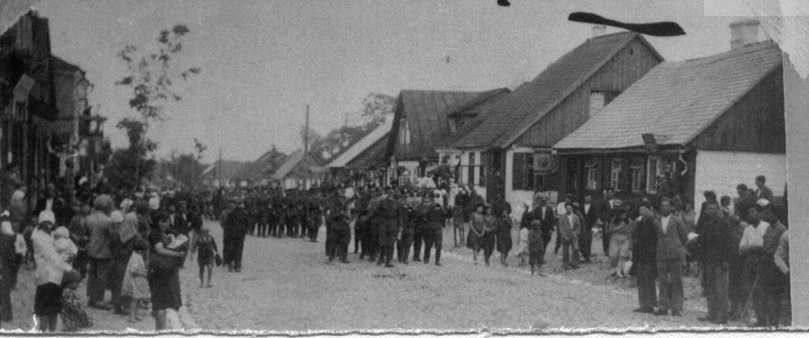
(Date Unknown — Circa 1940s)
During World War II
According to the pact between Germany and the Soviet Union, Sopotkin was annexed in Sept. 1939 to the Soviet-occupied territory. Because of its proximity to the German border (approx. 5 kilometers), Sopotkin was declared a border area and this fact caused constant tension which prevailed in town in all the 22 months of the Soviet rule.
All the private houses in Sopotkin, the size of which exceeded 50 square meters, were confiscated by the Russians and the owners and their families were ordered to leave town and settle in a distance of no less than 100 kilometers inside the territory of the Soviet Union. Hundreds of farmers’ families who were categorized as “kulaks” were banished to Siberia. A similar fate befell many Jewish families. The private stores in Sopotkin were closed. To the tailors, the cobblers and even the horse and buggy men cooperatives were established. The old Beit-Ha’Midrash became a movie and a house of entertainment.
Thousands of Russians flooded the town, they were the people of the new administration and the army, as well as, the young people, members of Komsomol who were engaged by the army in the building of various fortifications in Sopotkin and its vicinity.
On Saturday night, the 21st of June, 1941, there were rumors of mass deportations which awaited those who didn’t receive a Russian passport. At 2:00 A.M., the Germans began bombing Sopotkin with cannons, and the shelling lasted the entire night as the town was burning. The residents and the soldiers fled, many were killed or injured and burnt. The German army encircled the town from all sides, and at 9:00 in the morning, the 22nd of June, 1941, it conquered the town without any resistance from the Russians.
Sopotkin was burning for 4 days. Only a few houses remained standing. The Jews who returned from the vicinity were summarily caught by the Germans and were forced to clean the area of corpses and ruins. The Rabbi and a few distinguished Jews were accused of collaborating with the Russians, were led to the vicinity of Augustov, and were shot. All the Jews of Sopotkin were assembled in a convent that was in the neighboring town of Teolin (according to another version they were assembled in a community center or a movie theater in Teolin).
In this camp the prisoners didn’t receive any food. At night the Jews went over the fences and managed to get some food from the farmers. In June, 1942, the Germans sent all the men, except people with trades, to forced labor in Staroshailtze. All the Jews remaining in Teolin were returned to Sopotkin and were housed in the few houses which survived the fire in Osochniki St., and there the ghetto was erected for them.
On the 1st of November, 1942, the ghetto was liquidated. It was told to the people that they are being transferred to work in the Ukraine. Each person was allowed to take work clothes, a pair of shoes, and a hand parcel. Each family received a wagon with a policeman and they were transferred to a transient camp in Kaylbashin, which was 5 kilometers away from Grodno. In the summer of 1941, a camp for Russian prisoners was erected. Approximately 25,000 Soviet prisoner-soldiers were housed in hundreds of trenches they dug for themselves, and lived under sub-human conditions. They all perished, most of them in the typhus epidemic that plagued the camp. In their place came from Nov. 1942, between 25,000 and 30,000 Jews from settlements in the vicinity of Grodno and Bialistok. The first who were brought there were Jews from Sopotkin.
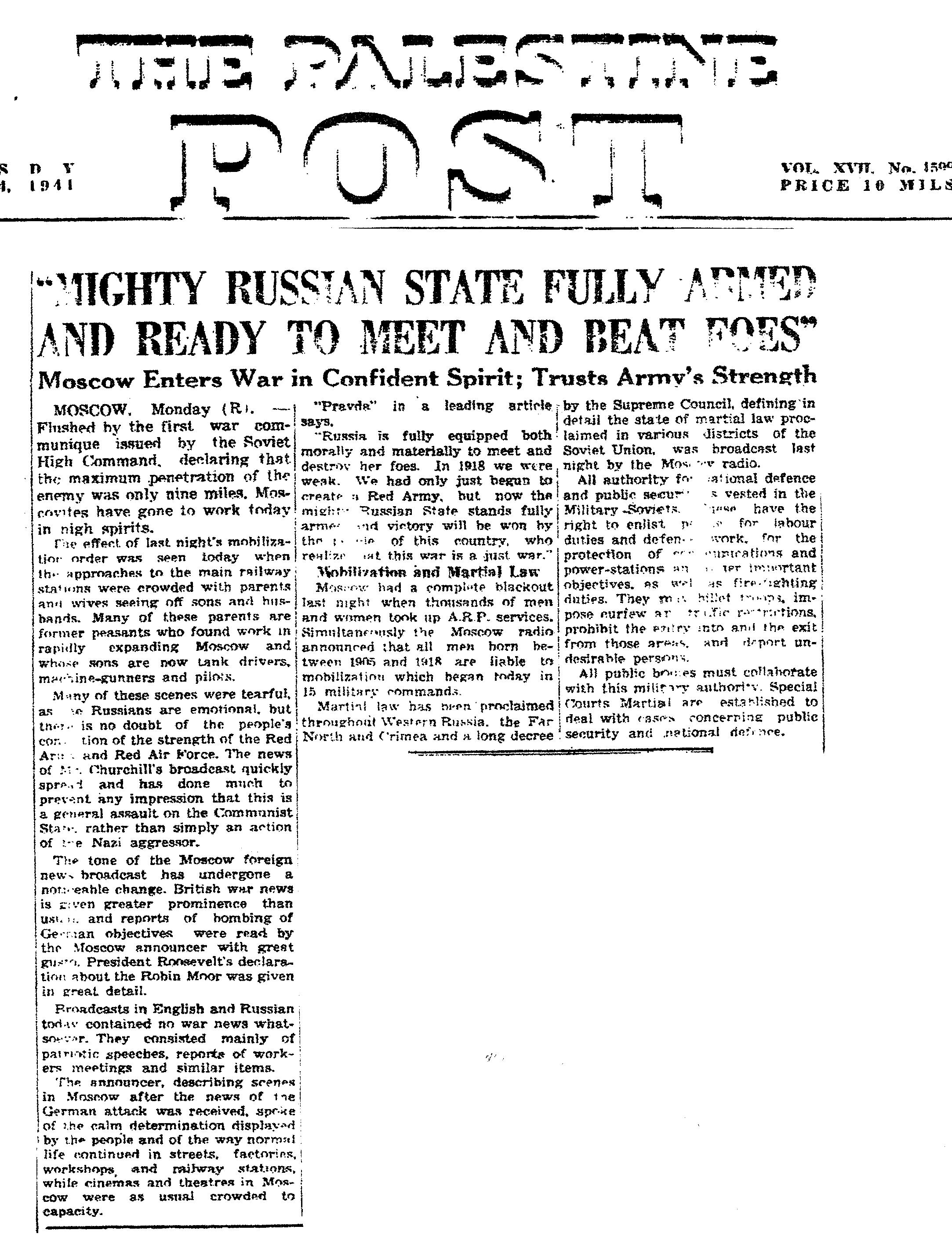
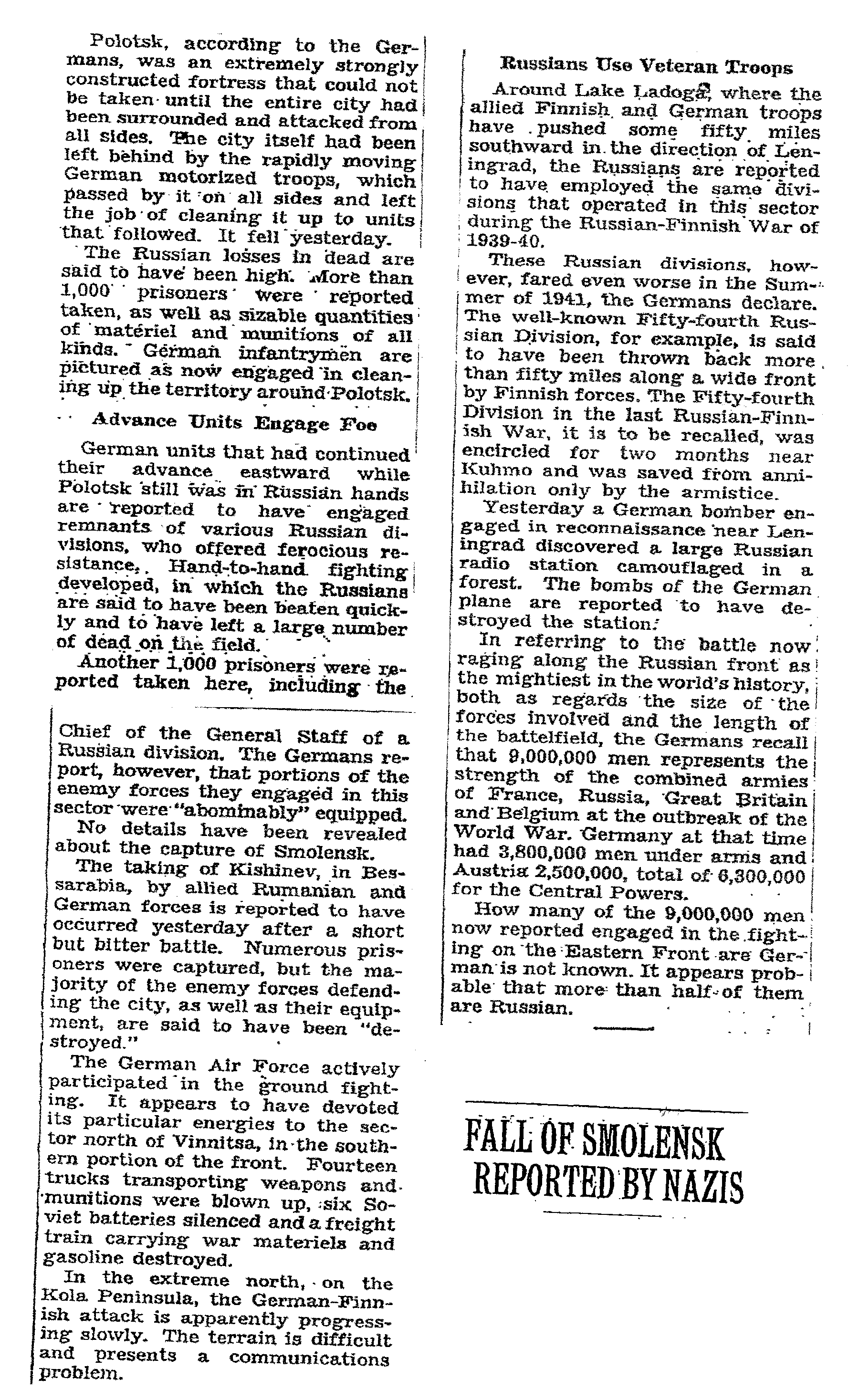
June 21, 1941: The Germans Attack Russia — Operation Barbarossa — Sopockin Bears the Brunt of the Attack on the First Day
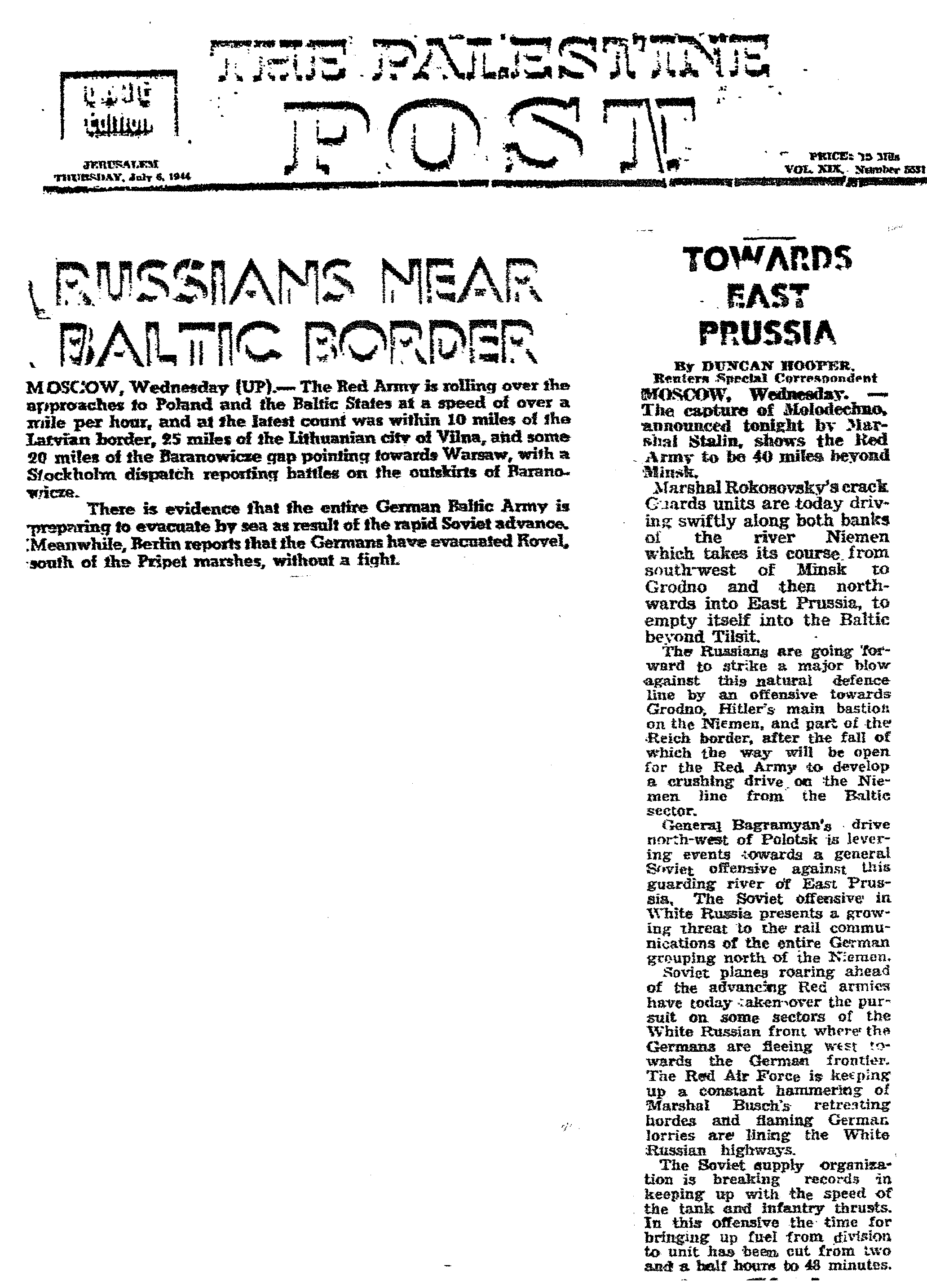
July 6, 1944: The Russians Take Back Sopockin
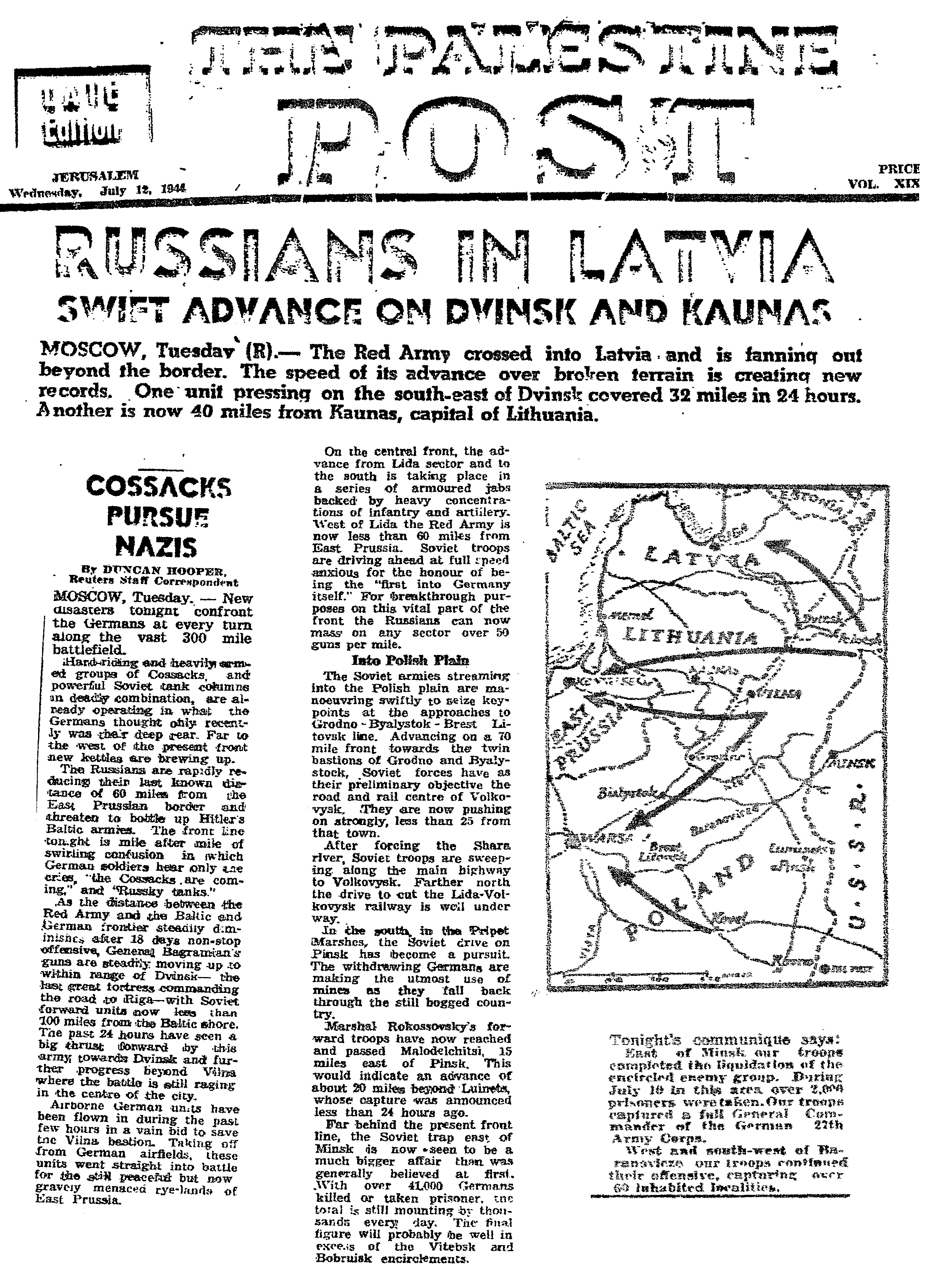
July 12, 1944
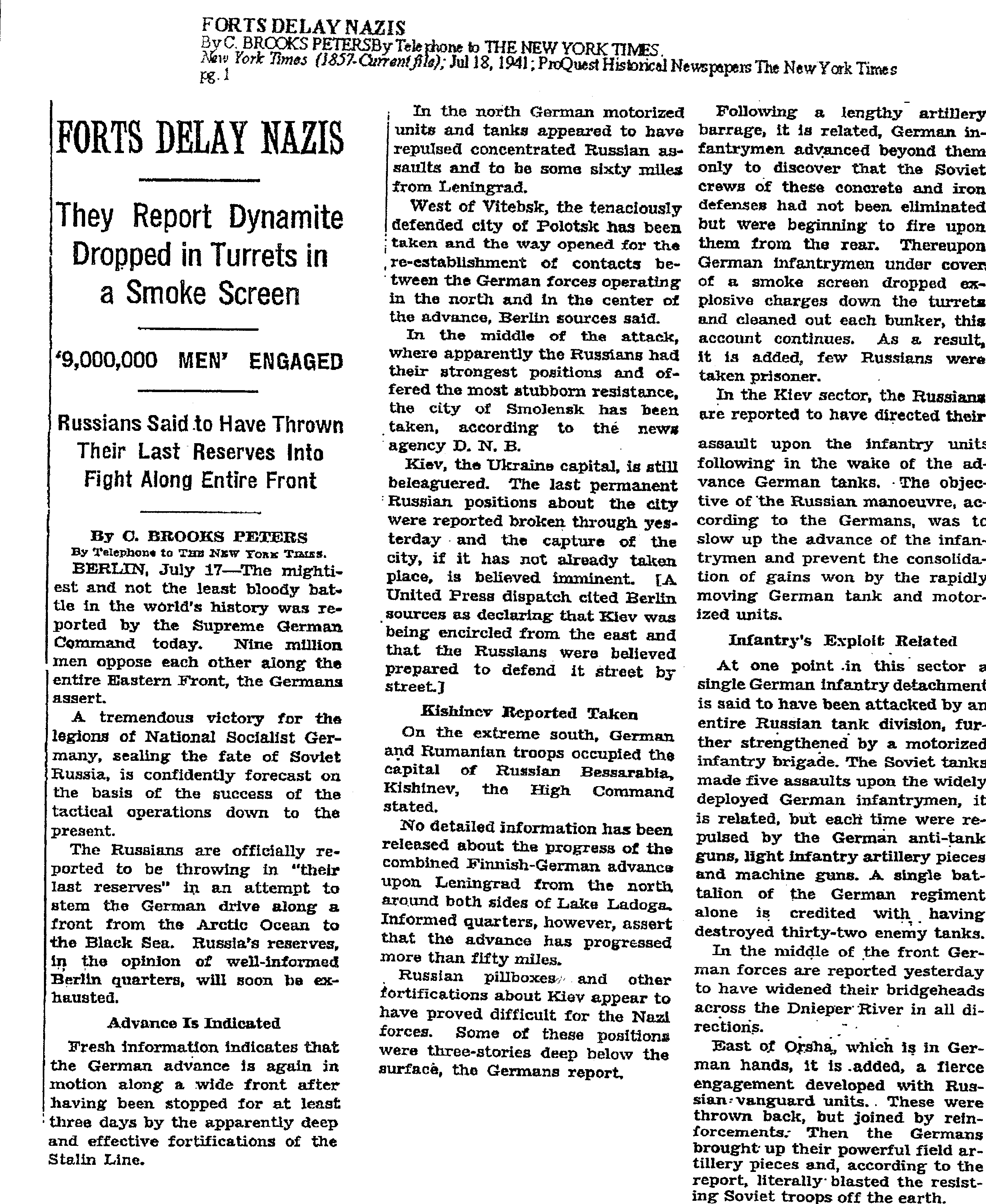
July 18, 1944
.jpg)
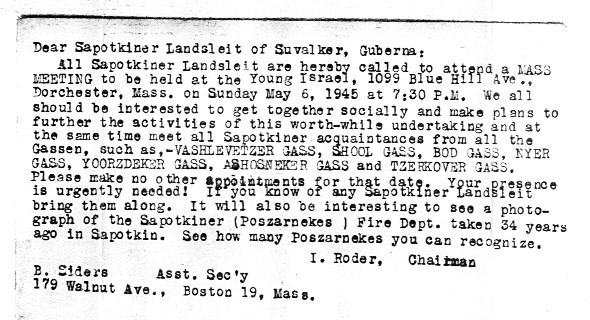
A 1945 Postcard From the Boston Branch To the New York Branch
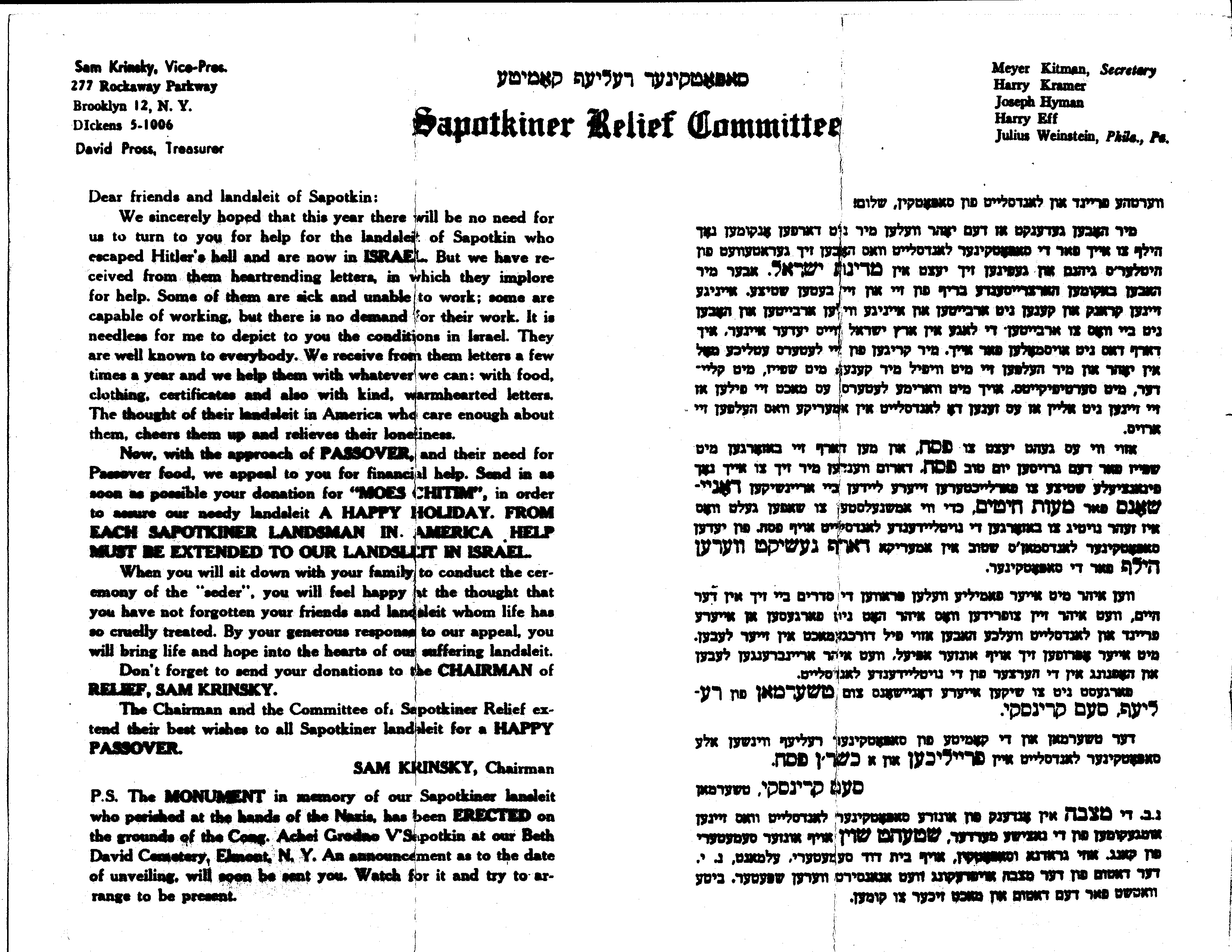
On June 23rd, 1983, then President Sam Krinsky, wrote to all the members, in pertinent part, that
“It is the wish of your present officers that the name CONGREGATION ACHEI GRODNO VASAPOTKIN be kept in tact and you always be considered as one of its members, as long as each of you are alive. With that thought in mind, your present officers have re-elected themselves in their present office. If they are called to ABOVE, one of our younger members will be called on to take over the vacant position and trust that that individual will not refuse.”
On October 14th, 1983 two new officers, first generation Americans, were elected, Arthur Kramer and Leonard Skriloff. These officers continue today (2002).
World War II Sopockin Document
Courtesy of the Holocaust Museum
.jpg)
The Kilbassino Transit Camp
Many people from Sopockin were taken to a camp, about five miles from Grodno. It was called either Kielbasin or Kilbassino (Russian). The Yiskor Book, jewishgen.org/yizkor/sopotskin/sopotskin.html, gives an all too vivid depiction of what it was to endure in this place. The author put it this way—
“After the liquidation of the Russian camp, the Sopotkin Jews were brought there. After them, about twenty-five thousand Jews from the regions of GRODNO and BIALISTOK were brought there. They were pushed into the deep, wet pits which was called camp. At the entrance stood the hangman, the S.S. Rintsler with a wiper (an iron stick) in his hand. They were beastly beaten and pushed into the pits. All day long they sat in the deep, cold, dark pit. During two hours every day they were forced to crawl out from the pits for appeal, to run and to be beaten again and again. They received one slice of bread a day and “soup” from dirty and rotten potatoes which nobody could eat.”
It was told to this writer, by one who wishes to remain anonymous, who survived from here and later from other camps, that most of the prisoners were forced to squat in narrow but deep trenches all day and night, rain or shine. Vincent Chatel stated that he found something about this camp in The Black Book, Text and Testimonies, ed. Ehrenbourg and Grossman; Solin/Actes Southern: 1995. It is a short testimony from Mordechai Tsiroulnitski, survivor of Auschwitz, Roll number 79414. Mr. Chatel has translated it from the French—
“On November 2nd, 1942, the whole population of OSTRYNA was transferred to the camp of KELBASSINO, near GRODNO. It was a former POW camp, but there was nobody when we arrived. All the Jews from the cities and villages around Grodno were transferred to Kelbassino. We had to live in barracks, three hundred people per barrack. We were forced to work in the surrounding swamps. Each day we received 150 grams of bread and one or two frozen potatoes. For any reason the Lagerfuhrer Insul was beating us with a hammer. He was hitting us directly on our head, until we faint. Starvation and typhus killed a dozen inmates per day. The deaths were not buried. There was a huge pit, not far from the camp. The corpses were just thrown into the pit, then covered with lime.”
The living conditions in the dark, in the cold, and in constant humidity, with no clothes and no food (the daily food ration was 100–150 grams of bread and “soup” which was prepared with potatoes with the peels and mud on them), brought the people to complete weakness and caused a great number of deaths.
Every day 70–80 died in the camp. Moreover, the camp commander, a sadistic Nazi called Karl Rinsler, killed with his bare hands many Jews, just for sport.
From Kaylbashin transports left for the death-camps of Treblinka or Auschwitz every few days. On the 19th of Dec. 1942, the camp in Kaylbashin was liquidated. The rest of the Jews, approximately 5,000, among them from Sopotkin, were walked to the area of the former ghetto in Grodno. From there, they were all deported, in two transports, in the 18th and 19th of January 1943, to the death-camp of Auschwitz.
It is told that after the liquidation of the Sopotkin ghetto, a Jewish child of 7 or 8, by the name of Lepchak, survived. He managed to hide among the ruins without being caught by the Germans. One day the Germans instructed the Christian inhabitants to gather the remnants of furniture and other things and put them in one place, at the center of the desolate ghetto. Germans then put it all to the fire and the child came out of the ruins [to get warm]. The Germans handcuffed his hands and feet with barbed-wire and burned him alive in front of the Christians.
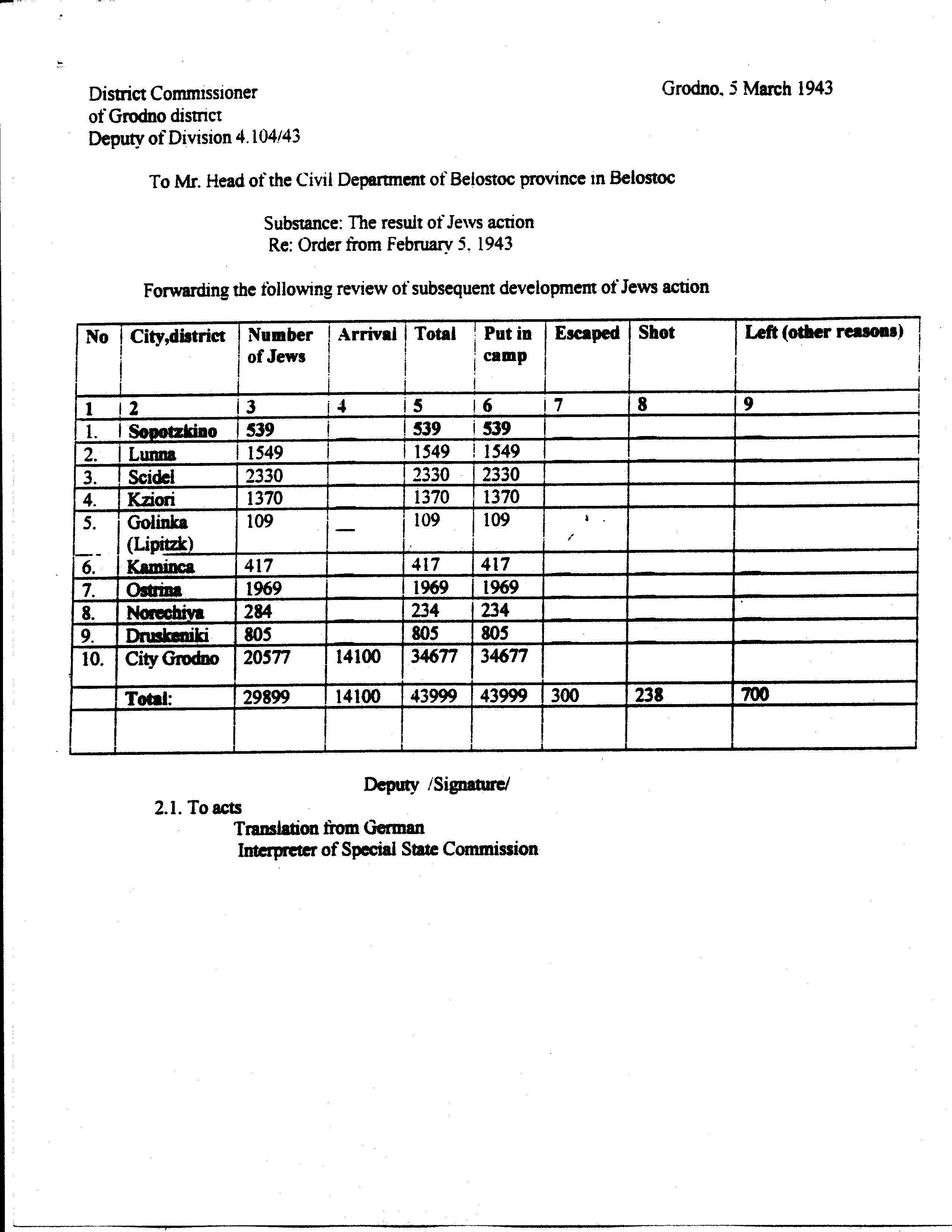
In the Handbook of the State Archives of the Republic of Belarus, it states that “… on February 5, 1943, 539 people were murdered in the ghetto in Sopotzkin.” While the 1921 census shows a population of 888 Jewish people residing in Sopockin, the death of 539 people would only account for a part of the population no matter what the exact number was at the time of the Nazi occupation compared to the 1921 census. The survivors of Kilbassino and other Sopockin survivors elsewhere have since flourished. They and their descendants live mainly in Israel, the United States and Argentina.
Righteous Gentiles
A few of the Sopotkin Jews managed to stay alive following the Shoah. Among them were Alter Biblovich and his wife, Rachel, and their daughter Luba who were hidden in the home of Pyoter and Sofia Paliachik and their 6 children in the village of Kadish. In March 1978, a committee of Yad Va’Shem recognized the Paliachik family as Righteous Gentiles.
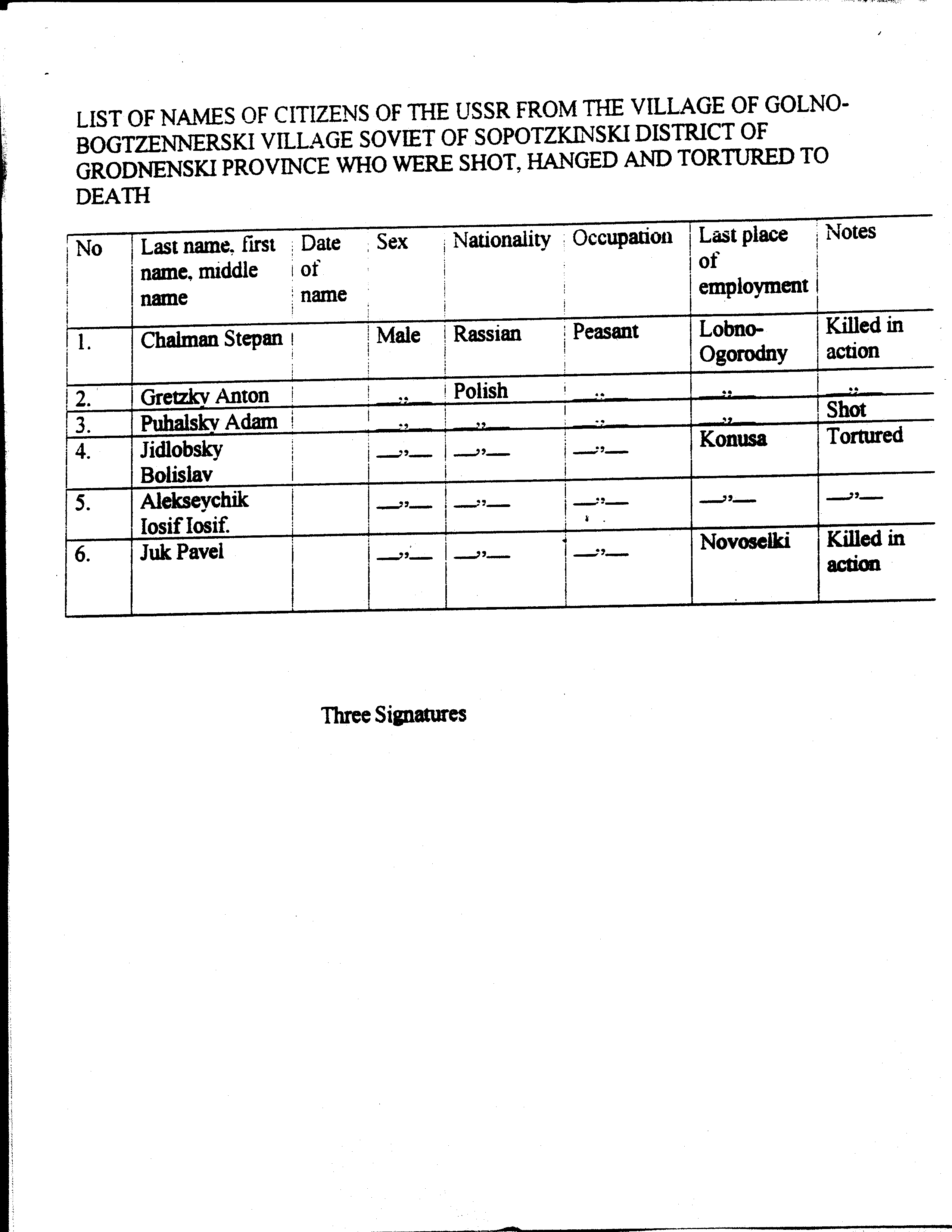
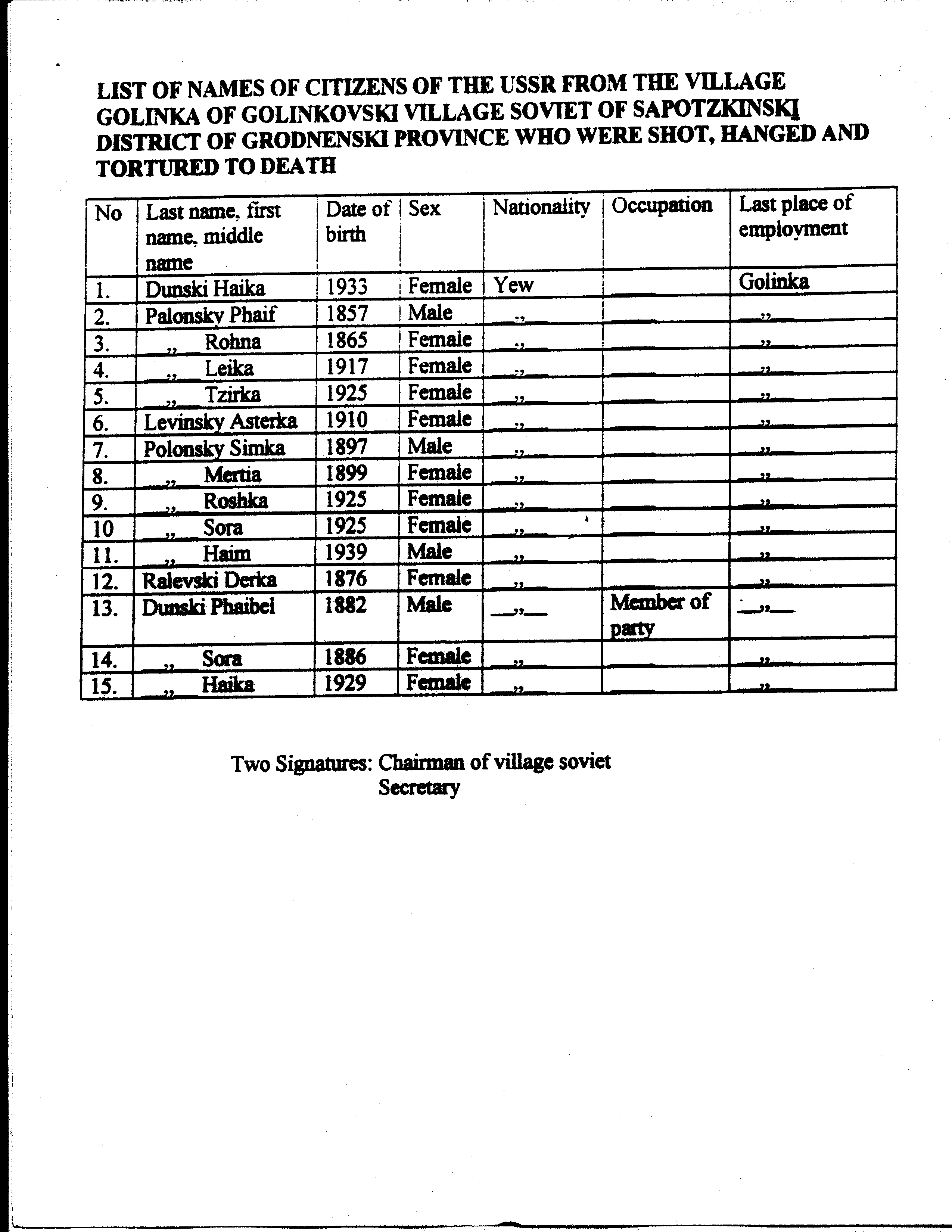
Towards, and at the end of WW II, The Soviet Army captured many Nazi documents. These documents eventually came under the auspices of the Soviet Extraordinary State Commission. Many of these documents are now in the possession of the archives at the United States Holocaust Memorial Museum. The documents, including those regarding Sopockin, were translated from German to Russian (Cyrillic) in 1945 by the Commission, and more recently, those from Sopockin, in 2001, by Bela Terasulo, from Russian to English. These documents are death lists for the Sopotzkinski District of Grodnenski Province.
Death Lists
The following scanned documents are death lists for the Sopotzkinski District of Grodnenski Province. They were translated from German to Russian (Cyrillic) in 1945 by the Soviet Extraordinary State Commission, and from Russian to English in 2001 by Bela Terasulo. The originals are held in the archives of the United States Holocaust Memorial Museum.
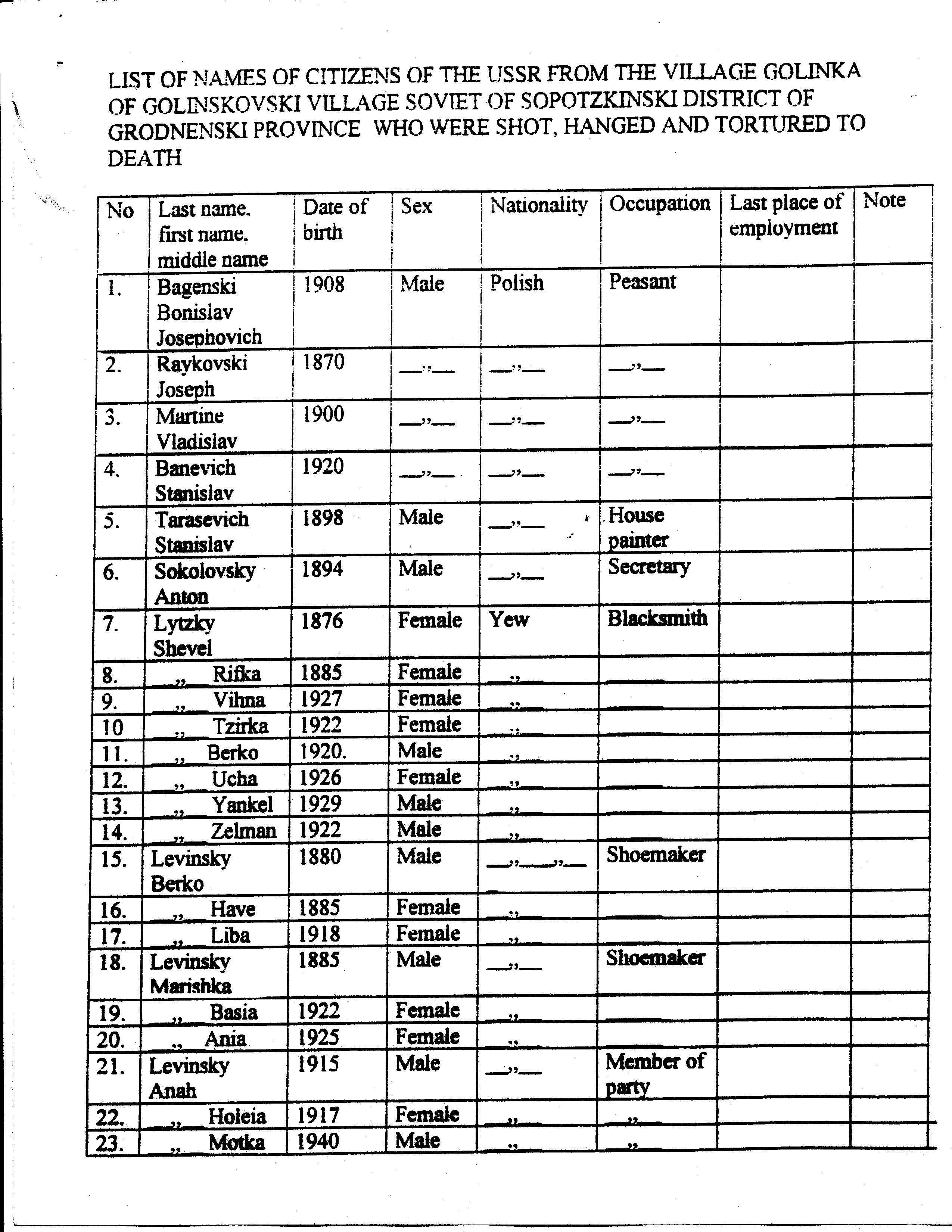
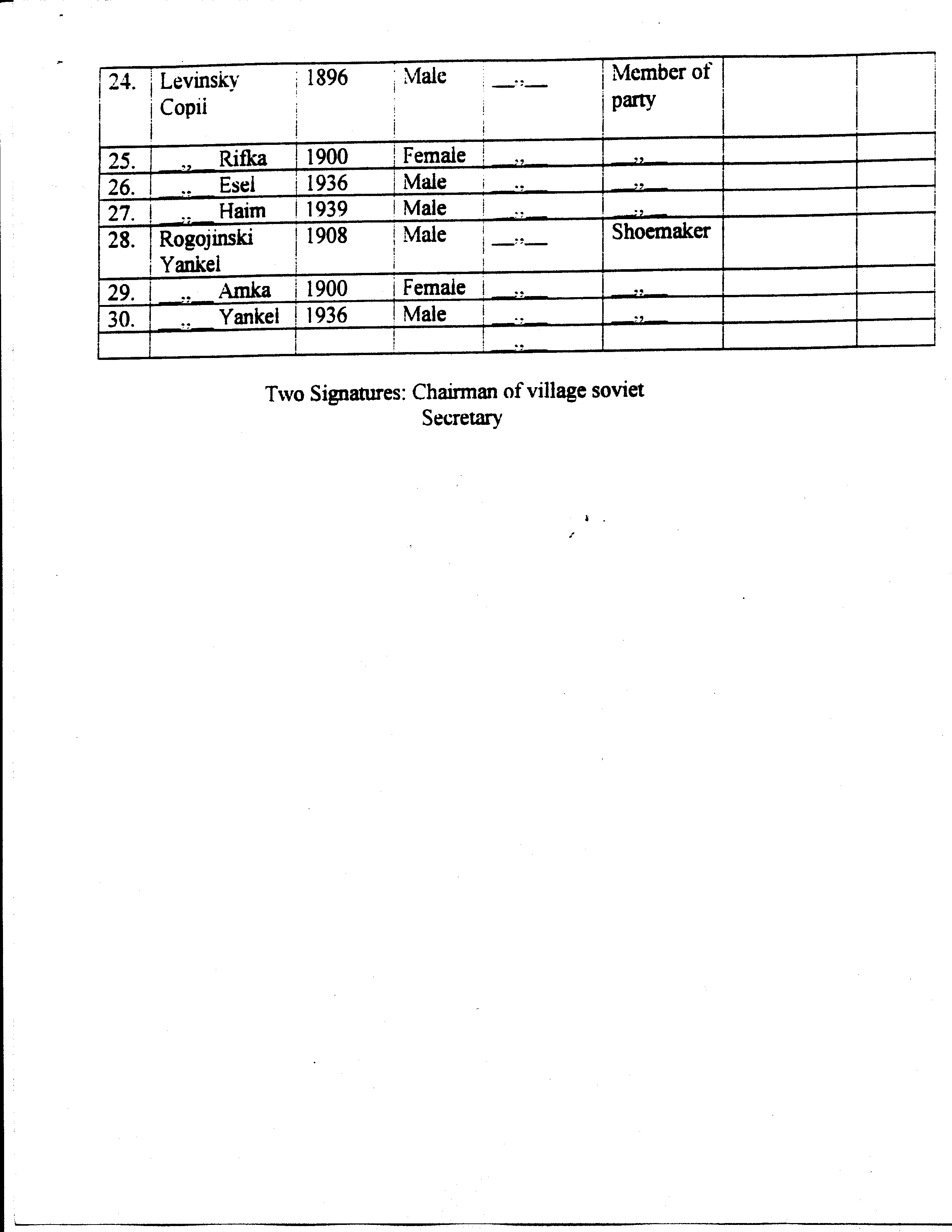
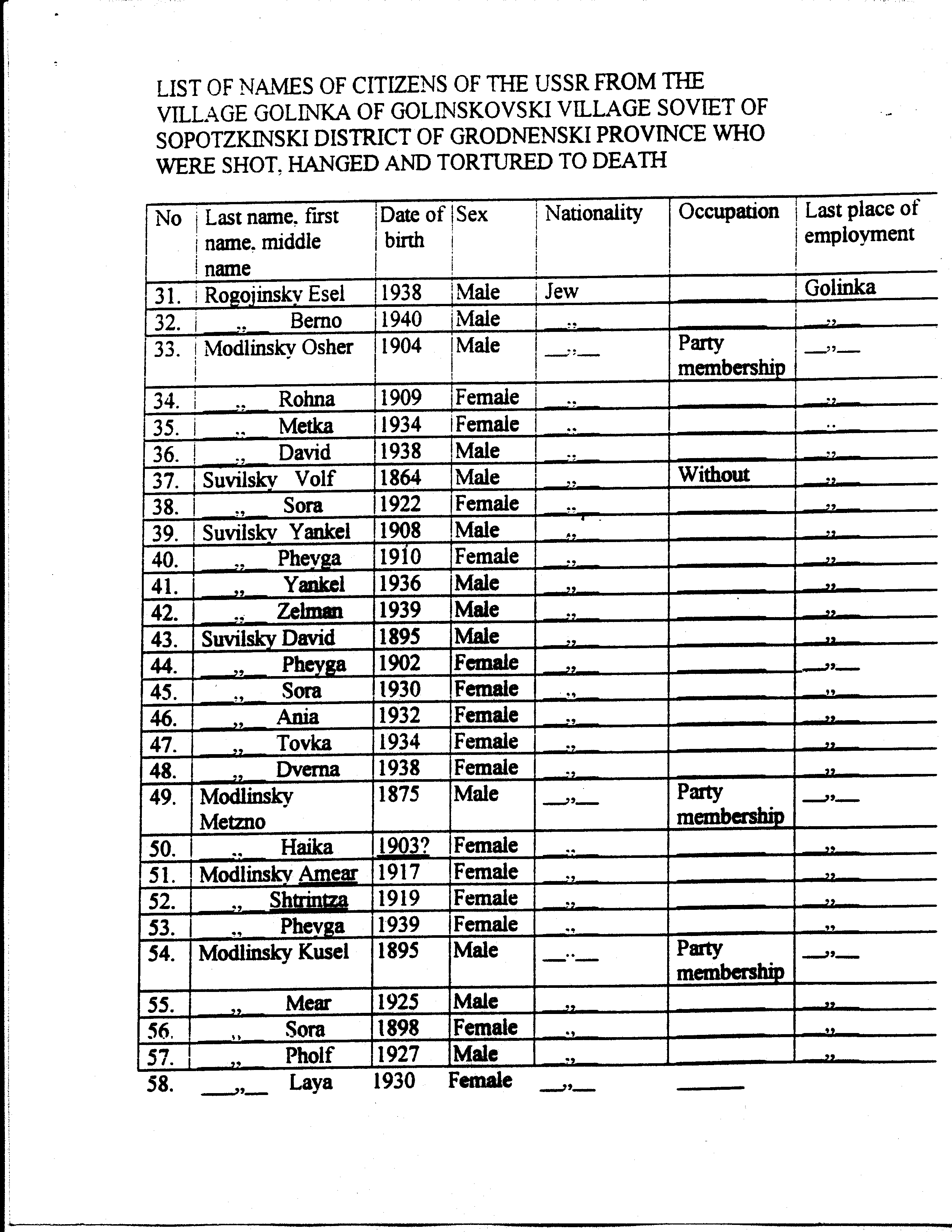
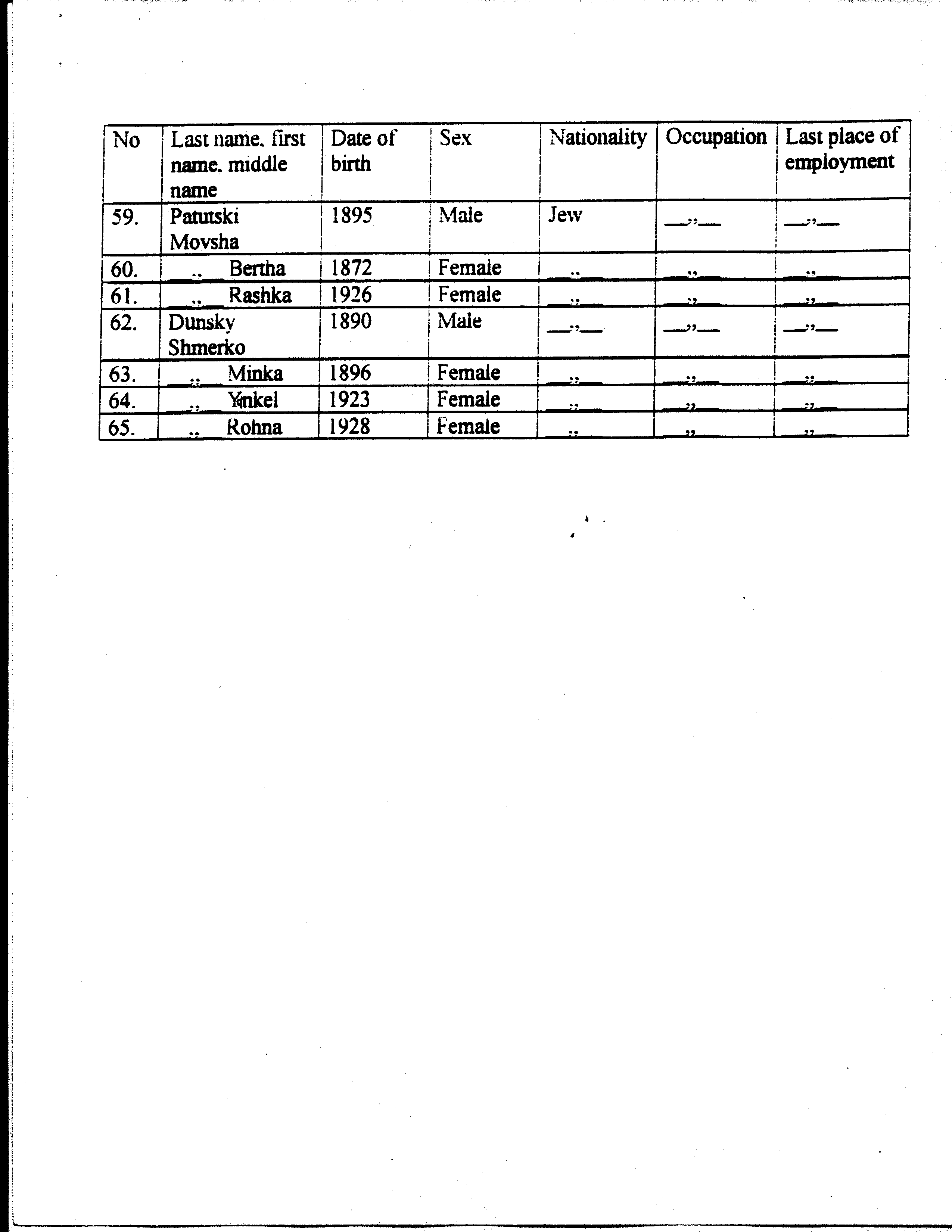
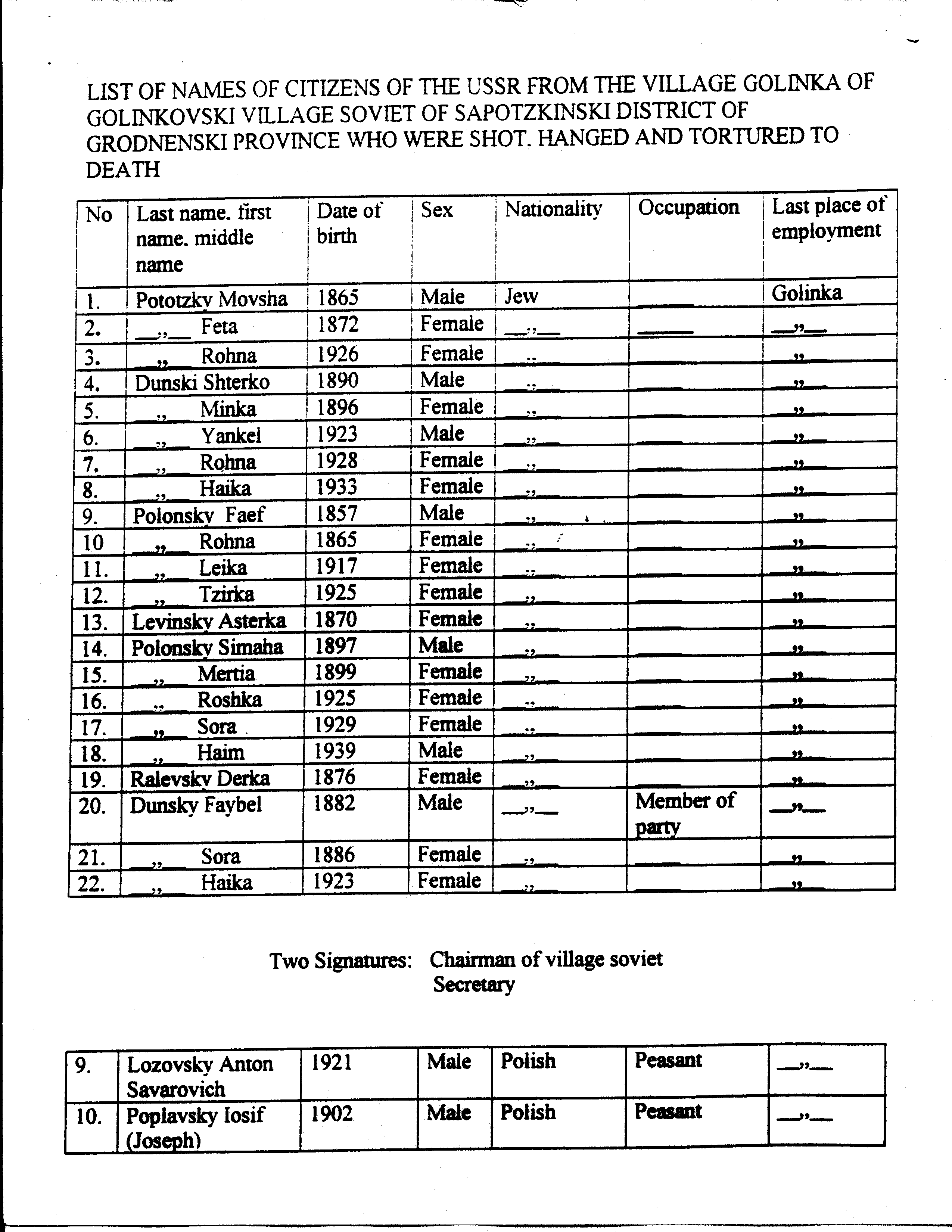
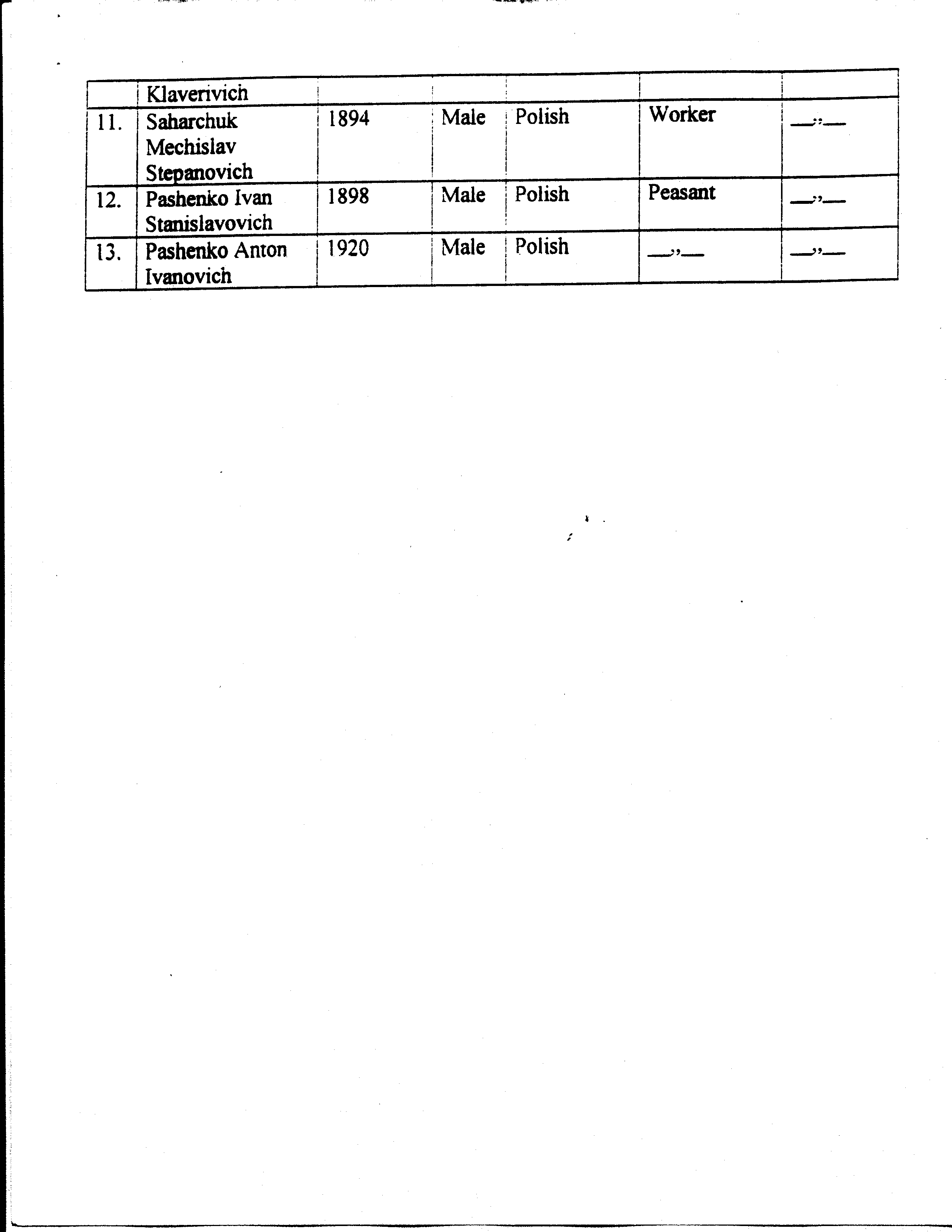
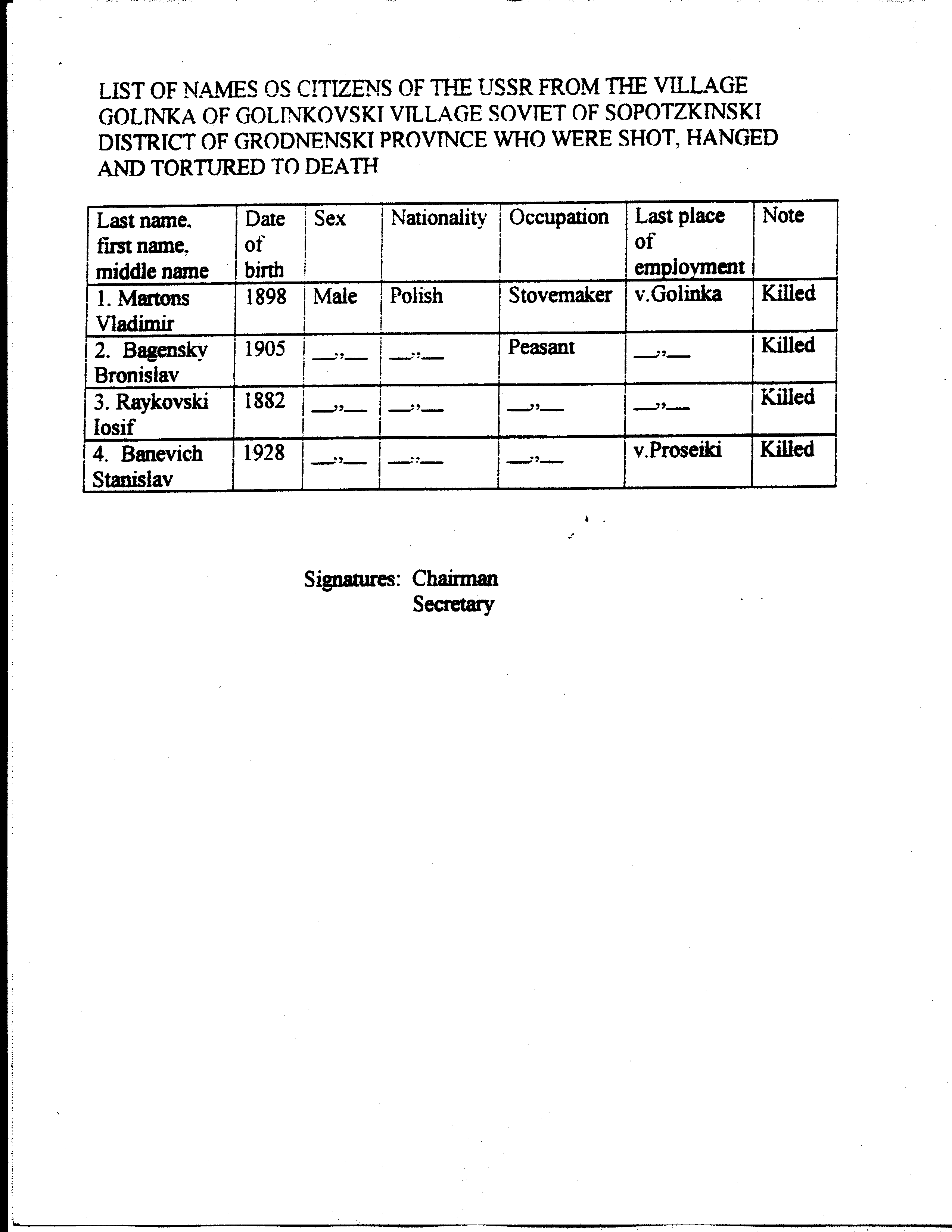
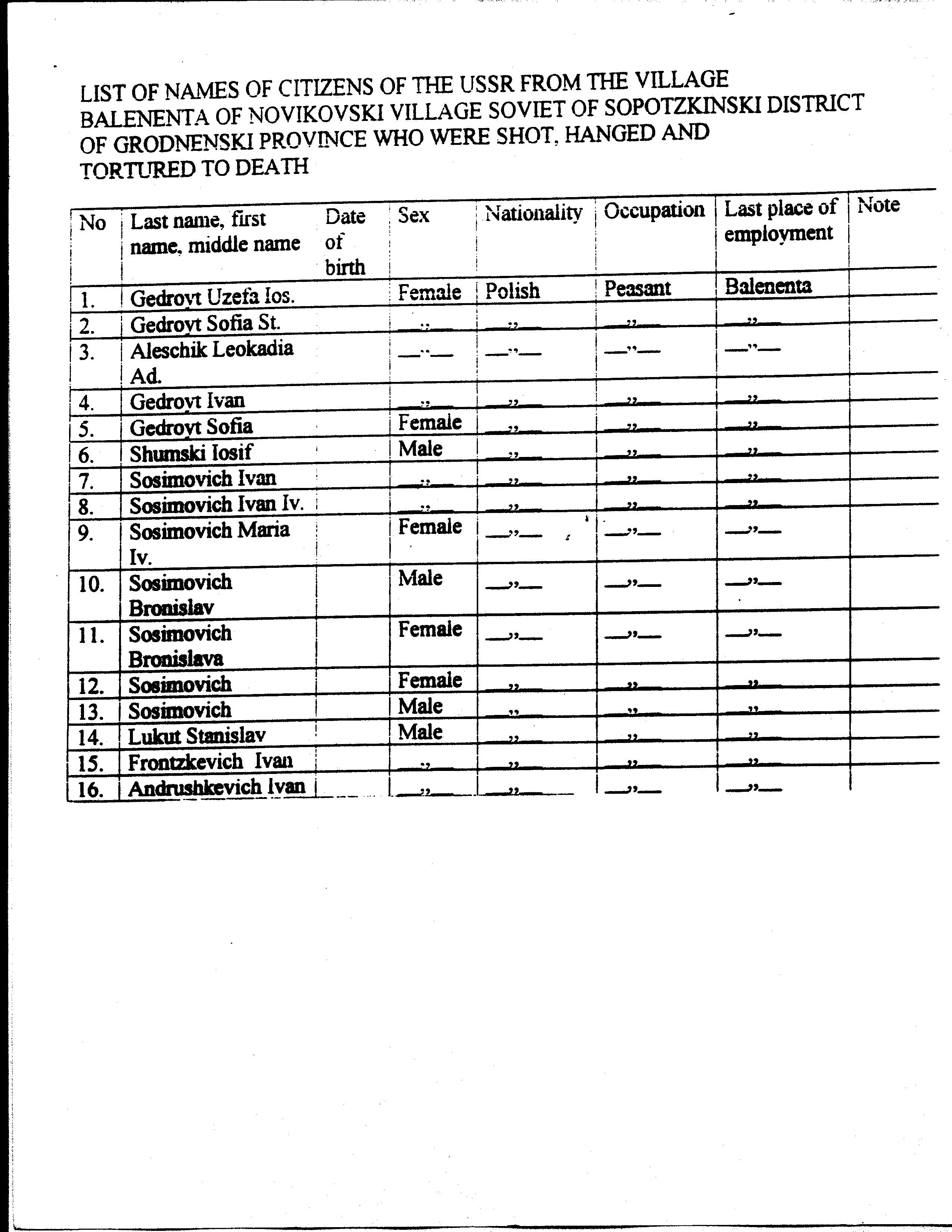
Rabbis of Sopockin
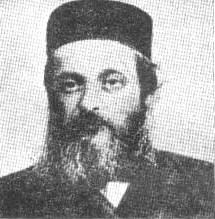
(1857–1921)
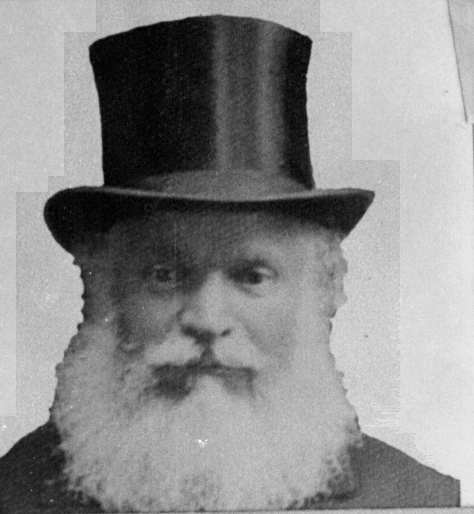
Sopockin Rabbins
- Shimon Meir Rabinovitch (circa 1830s–1900s)
- Schmuel Ya’akov Rabinovitch (Spiritual Leader—1898)
- Mordechay Eliyahu Rabinovitch (Spiritual Leader—1908)
- Menachem Mendl Rabinovitch (circa 1930s)
-
M.H. Rabinowitz (circa 1903)
(Brownsville, N.Y.)
M.H. Rabinowitz owned The Straight Path prior to it winding up in a bookstore from which the photocopied text was placed on file at YIVO.
See the Yiskor Book for further history on the writings and movements of these great men.
(circa 1935)
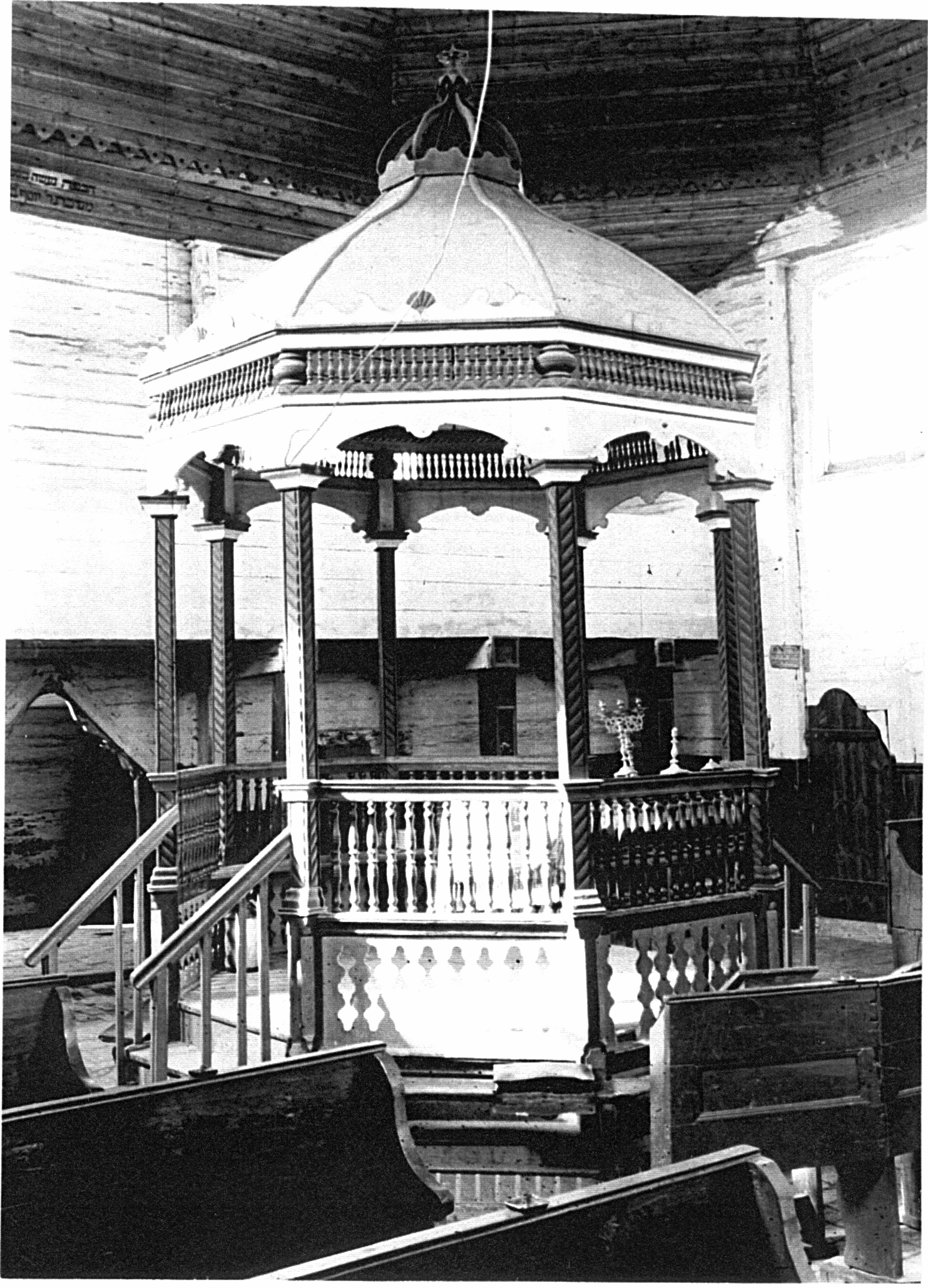
Photograph from Instytut Sztuki Polskiej Akademia Nauk, Warszawa
Courtesy of Shirley Gould
(Click to enlarge)
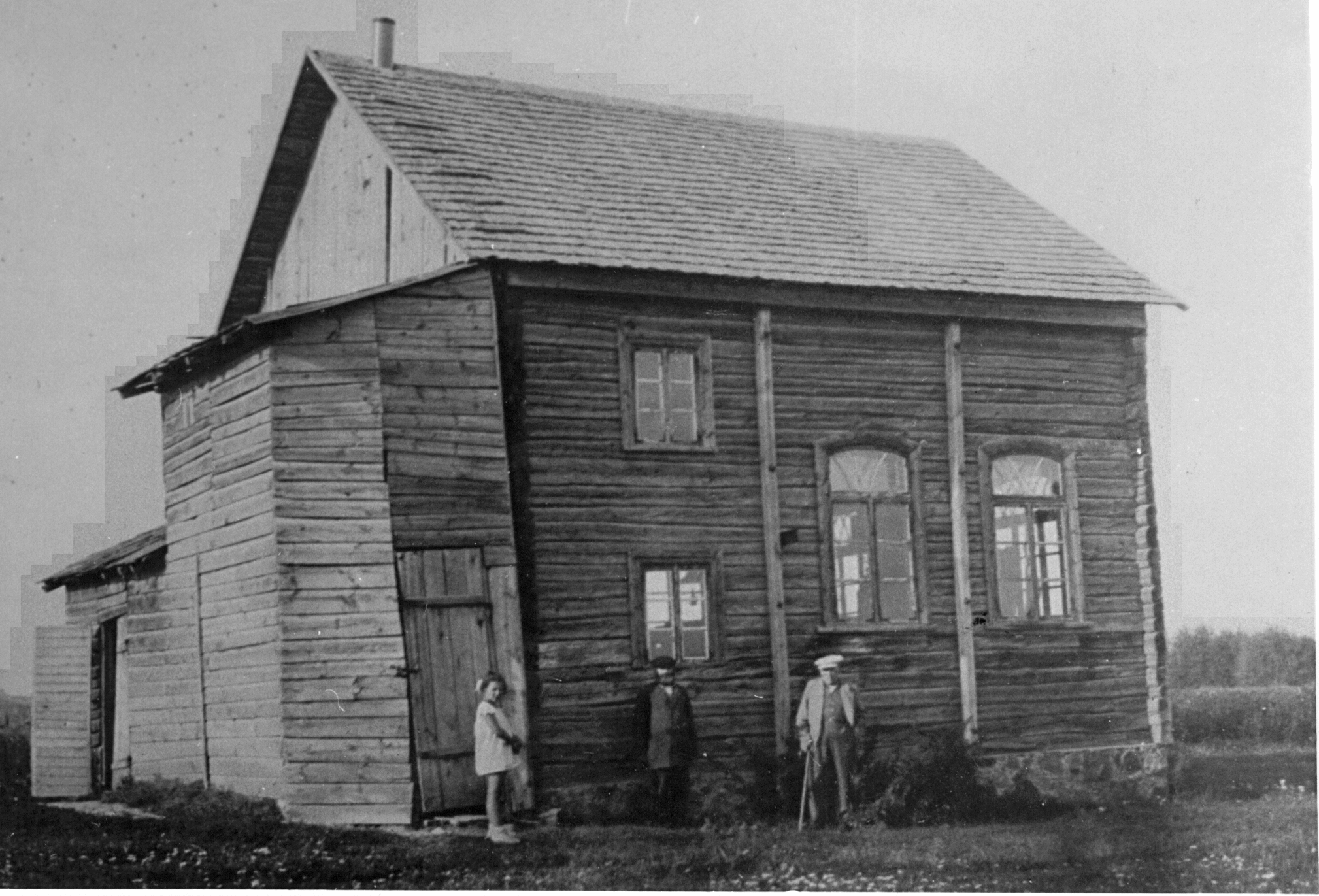
Congregation Achei Grodno Vasapotkin and Chevra Mishnayos
The Togetherness of the Jews of Grodno and Sopockin
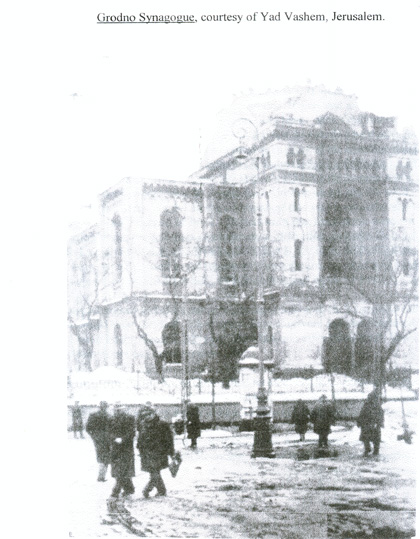
Research shows Sopockin to be approximately 25 kilometers northwest of the City of Grodno, or 21 versts. See Sopockin: An Historical Overview, Landsmen, Vol. 9, No. 4 (Nov. 1999). Sopockin is a very small town, compared to the City of Grodno. Sopockin’s population, historically, ranged perhaps from 315 (1765) to 1674 (1897) ibid. See also Landsmen, Vol. 14, Numbers 1–2, p. 17 (June 2004). Grodno’s population was recorded as 207,778 (Census 1897).
The Jewish Encyclopedia—Belarus SIG: jewishgen.org/belarus/grodno1.htm. The first paved road built in Sopockin was called Nova (New) Street and later Grodno Street. It went all the way to Grodno so as to allow bus travel instead of horse drawn carriages.
The above data is shown to illustrate the near proximity of the two places so as to understand the relationship between the Jewish peoples of both places.
According to one source, in 1913, a combined society was formed in New York City which involved both communities. It was called Achei Grodno V’Anshei Sopockin Mishnios. This name obviously included the names of the City of Grodno and the town of Sopockin. The organization may have been formed shortly before or after 1903 because Harry Kramer, who was an initiating and founding officer, emigrated then. No matter when it was formed, it raised funds for those still in Sopockin and helped build or contribute to shuls and synagogues in New York. During the Great War and World War II it helped Sopockin and Grodno citizens emigrate to such places as Israel, Canada, Buenos Aires and the United States. See ibid., p. 21–22. (The town of Sopockin has historically been spelled at least six different ways, and that’s just in English.)
The Society had a designated cemetery area in Washington Cemetery, Brooklyn, New York City. It was designated for members from both places. Washington Cemetery was established in 1895. The gates of the mutual area reads, in part, “Achei Grodno V’ondri Sopockin.” See Landsmen, Vol. 10, Numbers 1–2, p. 22–24 (Photo—Gates at Washington Cemetery).
Judy Goldman, a Sopockin survivor from World War II, quoted in the previously mentioned articles, recollects going to college in Grodno. Once, and as she says, only once, she walked the 25 kilometers from Sopockin to Grodno and back. Mrs. Goldman, who remembers attending, in Buenos Aires, the 30th anniversary of the last deportation by the Nazis of Jews from Grodno, was greeted with open arms and received a copy of the over one hundred page book, which marked the occasion named Ecos De Grodno (Echoes of Grodno), Little Israel Ass’n Of The Ex-residents of Grodno (July 1973) (No’s XXI–XXII) Buenos Aires; and which was autographed for her by more than 30 people from Grodno on March 28, 1974. The very first paragraph of this book states—
“In the month of March of this year commemorates 30 years since the date that Grodno was ‘Cleaned of Jews.’ Posters with that inscription were put in the transit station (of Grodno) by the executioners of our martyrs of Grodno, just like their neighbors: AMDUR, SKIDL, LUNE, VOLP, KUZNICE, SOKOLKE, OZIOR, SOPOTZKIN, ADELSK, etc. The final Jews were deported to the transitory concentration camp of KELBASIN and from there to the gas chambers of MAIDANEK, TREBLINKA and AUSCHWITZ.”
This banquet was attended by many, many survivors with their family members and friends and celebrated their survival. How many more survivors and their children and grandchildren live in Israel, Canada, Uruguay, the USA and other countries? The Kramer family alone, derived from Sopockin, numbers over 300.
So, what was the formal and the actual relationship between Sopockin and Grodno? Another survivor from Sopockin, Rachel Kapen, a renowned Jewish author, surmises that “Grodno, as being the big city of small Sopockin, it is no wonder the congregation is thus called.”
However, for our purposes, factual analysis must be sought, rather than speculation, no matter how well advised. For example, the following information was submitted by Maury Kitces, a fellow genealogist, who has done extensive research on the DUNSKY family, which had several branches from Sopockin, including the KRINSKY family. As stated, the congregation/society was named Congregation Achei Grodno Vasapotkin and Chevra Mishnayos. So, the question is were they two combined (very pious) congregations? Were they two separate congregations? Or was there just one? Was one a separate one from Sopockin, which at different times was within the borders of different countries, such as Russia, Poland, France and Lithuania; and was the other, Grodno, from Russia, Poland; or Lithuania, also a separate one? Today, Sopockin lies in Suvalki Province, Belarus; and, Grodno in Grodno Gubernia, Belarus. See bh.org.il.
Mr. Kitces writes—
“I also don’t have a definitive answer for why the names are combined, but I did find an early reference with a slightly different name—“Chevrah Achei Grodno v’Anshei Staputkin”. Which roughly translates to the society of the brethren of Grodno and the people of Sopotskin. Perhaps suggesting that there were once two community synagogues, and the Sopotskin one (probably much smaller) combined with the larger one. If they were not once separate, I don’t think they would have used “Achei” for one, and “Anshei” for the other. Sopotskin was only about a dozen miles from Grodno, and there were probably many members who had families from both cities.” —E-mail (6/21/2009).
Suwalki Gubernia was created in 1866–67, which included the town of Sopockin, where the first Jews had settled in the early 1600s. See Landsmen, Vol. 9, No. 4, p. 3. Perhaps the Jewish peoples of Sopockin were allied with the Jewish peoples of Grodno before any such borders. It seems that wherever Grodno and Sopockin survivors had wound up together, an organization was formed to aid those in need; for example, perhaps The Grodno Society in Buenos Aires; definitely, the Sapotkiner Relief Committee, officiated by many of the same officers in the Achei Grodno V’Sapockiner Society; and the Boston Branch of the same. There must also have been, or are, more.
Lastly, the stationary of the April 15, 1980 congregation states, in its heading, Congregation Achai Grodno Vasapotkin. Translated, the meaning offers more, and what should be sufficient proof, the Congregation of the Brothers of Grodno and Sopockin.
It would appear that just these names alone make the argument conclusive for the togetherness, the unity, of the Jews of Grodno and the Jews of Sopockin. So, with that in mind, the following article, found in the Society’s files, published in a prior issue of Encyclopedia Judaica, gives a glimpse at how it was historically, for Grodno certainly, and most likely for Sopockin as well. Permission to re-publish this article was granted by Beth Hatefutsoth, the Museum of the Jewish Diaspora, Databases Department (5/15/2009)—bh.org.il.
The information, a heart-rendering story, states that:
“… Grodno (Horodno), City in Belorussian S.S.R., formerly Poland-Lithuania. The Grodno community received a charter in 1389. They were banished by the general decree of expulsion of the Jews from Lithuania in 1495, but were permitted to return and to claim their possessions in 1503. Grodno became noted as a center of Jewish learning. By the end of the 16th century a number of Battei Midrash and Yeshivot had been established and Horodno was written by the Jews as though it were Har-Adonai (“The Holy Mount” in Hebrew). The community was spared during the Chmielnicki massacres in 1648–49 and gave asylum to fugitives from the south, but later suffered from the Russian invasions of 1655–57 and subsequent invasions by the Swedes. One of the three principal communities in Lithuania, Grodno was represented on the Council of Lithuania. The first Hebrew book to be published in Lithuania was printed in Grodno in 1788 in the Royal Press. In 1549 the Jewish population formed 17% of the total; in 1887 68.7% of the total; and in 1931 42.6% of the total population.
The principal traditional sources of income of Grodno Jews were commerce, crafts, and more recently, industry. In 1887, 88% of commercial undertakings, 76% of factories and workshops, and 65.2% of real estate in Grodno were Jewish owned. The situation did not alter appreciably before World War I, but after Grodno’s reversion to Poland the Jews were systematically ousted from their positions and from the middle of the 1930s a stringent anti-Jewish economic boycott was imposed. The huge Y. Shereshevsky Tobacco Factory in Grodno employed, before World War I, some 1,800 workers and provided a livelihood for hundreds of families in subsidiary activities, nearly all Jewish. Work stopped on the Sabbath and Jewish festivals and it maintained a school for the children of the employees. The Polish government nationalized it in the 1920s, making it conform to the official pattern and the majority of the Jewish workers were forced out.
Among the notable rabbis serving in Grodno were Mordecai Jaffe (16th Century); Jonah B. Isaiah Te’Omim, author of Kikayon De-Yonah (1630); Moses B. Abraham, author of Tiferet Le-Moshe (1776); Joshua B. Joseph, author of Meginnei Shelomo (1715); Mordecai Suesskind of Rothenburg (17th century); Simchah B. Nachman Rapoport of Dubno; and Benjamin Braudo (d. 1818).
From the end of the 1890s the various trends of Jewish labor movements became increasingly active in Grodno, in particular in the tobacco factory. Central to the movement was the Bund. The labor movements played an important part in organizing Jewish self-defense in Grodno in 1903 and 1907, and some Jewish youngsters there also avenged the bloodshed that resulted from the pogroms at Bialystok. A society for settling in Eretz Israel was founded in Grodno in 1872, and a second acquired land in Petach Tikvah on its foundation in 1880. The Society of Chovevei Zion in Grodno in 1890 gave generous support in building the girls’ Hebrew school in Jaffa. During World War II, when Grodno was under Soviet rule (1939–41), a clandestine Zionist center there transferred intending immigrants to Eretz Israel via Vilna. After World War I the Grodno Zionists, headed by Noah Bas, instituted the Hebrew educational system Tarbut. Jewish pioneers from Grodno emigrated in the successive aliyot from the beginning of the Bilu movement, and Grodno youth were among the first to join the second aliyah. The Grodno He-Chalutz Association was among the first founded in Lithuania, and the third aliyah from Poland was initiated by Grodno pioneers.
Under Polish rule there were pogroms in Grodno as early as 1935. The Nazis occupied the city on June 22, 1941. On Nov. 1, 1941, the Jews of Grodno were segregated into two ghettos, one for ‘skilled workers’ in the small, overcrowded ‘synagogue quarter’ (shulhof) and the fish market; the other, which was smaller and reserved for the ‘unproductive’ in the suburb De Slobodka. On Nov. 2, 1942 their liquidation began to Auschwitz and Treblinka.
Early in 1942, a Jewish underground resistance and defense movement was formed; members of Zionist youth movements, especially women, set up a communications center in Grodno for contact with the ghettos in Vilna, Bialystok, and Warsaw; there was also a workshop for forging ‘Aryan’ papers and travel permits for members of the movement engaged in rescuing Jews and in armed defense. An unsuccessful attempt was made to assassinate Streblow, a chief executioner of Grodno Jewry. There was also an attempt to organize a mass escape from the Great Synagogue, which served as a collection center for deportation. After the war some 2,000 Jews resettled in Grodno. By the 1960s Grodno had no synagogue. The ‘old’ synagogue was a storehouse; the ‘new’ one was used as a sports hall. In the mid-1950s the Jewish cemetery was plowed up, and the tombstones were taken away and used for building a monument to Lenin.”
Encyclopedia Judaica was first published in Jerusalem by Keter Publishing House and in New York by the Macmillan Company. The New Encyclopedia Judaica, 2nd edition, covers more than 25,000 articles with over 15 million words by approximately 2,200 contributors and 250 editors around the world. General editors were, successively, Cecil Roth and Geoffrey Wigoder.
The current officers of the Achei Grodno V’Anschei Sapockin Chevros Mishnayos, more currently named, Congregation Achai Grodno Vasapotkin, are Seymour Kramer, Alan Kramer and Alfred Kramer.
Other Sopockin Scholarly Books
Rabbinical Responsa: The Straight Path
Rabbinical Responsa, The Straight Path, published in 1903, and written in the Hebrew alphabet, by Chief Rabbi Schmuel Ya’akov Rabinovitz, the head of the Rabbinical Court of Sopockin, Russia (now in Belarus) has recently been found (March, 2001) in an old Brooklyn, NY bookstore and retrieved before it very shortly would have decayed forever.
The book, according to Abraham Schwartz, Attorney-at-Law and scholar, Baltimore, Maryland, is a typical form of Torah literature encompassing decisions rendered on legal questions. In answering the host of questions presented to him over time, Rabbi Rabinowitz references and used the knowledge and wisdom from the Code of Jewish Law, the Torah, Torah Responses and other legal and religious sources, to arrive at his reasoning and conclusions. For example, one of the easier problems asked—would it be in keeping with the faith to rent a Jewish field to a non-Jew as the field would most likely be worked on Shabbos.
The book, which was retrieved from a used-book store in Brooklyn by Michoel Ronn and Alfred Neil Kramer, is now on file in the Sopockin Collection at the YIVO Institute, 15 West 16th Street, NYC, NY 10011.
Kol Jacob
Kol Jacob, a book, in part, on personal philosophy, written by Jacob Gutkovsky, Horav Goan, was published in 1947 the same year he most likely passed away. Mr. Gutkovsky, son of Eleyahu, was born in Sopockin in 1870. He studied under and was ordained three times—by the Rabbi of Mir, by the Rabbi of Volozhyn and by the Rabbi of Ayishishok. This accomplishment some say entitles him to be referred to as a genius. In 1898 he became the Dean of the Yeshiva at Lodz. In 1937 he made Aliyah and, among other things, delivered lectures in a synagogue in the middle of Tel Aviv. He died suddenly and his book, Kol Jacob, was published posthumously. He also wrote books about Maimonides and the history of the world. He was said to have had a fantastic mind, to be a thinker, modest, a real educator, one who always put himself to the side and who was happy with very little, only caring about learning and teaching.
The book, Kol Jacob, is now on file, in the Sopockin Collection, at the YIVO Institute, 15 West 16th Street, NYC, NY 10011.
Further Reading
For further information about Sopockin see the Sopockin Yiskor Book at jewishgen.org/yizkor/sopotskin/sopotskin.html. Also see Volume 9, Number 4, November 1999; Volume 10, Number 1–2, June 2000; and Volume 14, Numbers 1–2, June 2004—LANDSMEN (jewishgen.org/suwalklomza).
Also see “My Search for Family Roots in Sopotskin” by Steve Lipman at jewishgen.org/Belarus/newsletter/Sopotskin.htm.
Sopotskin Cemetery Restoration
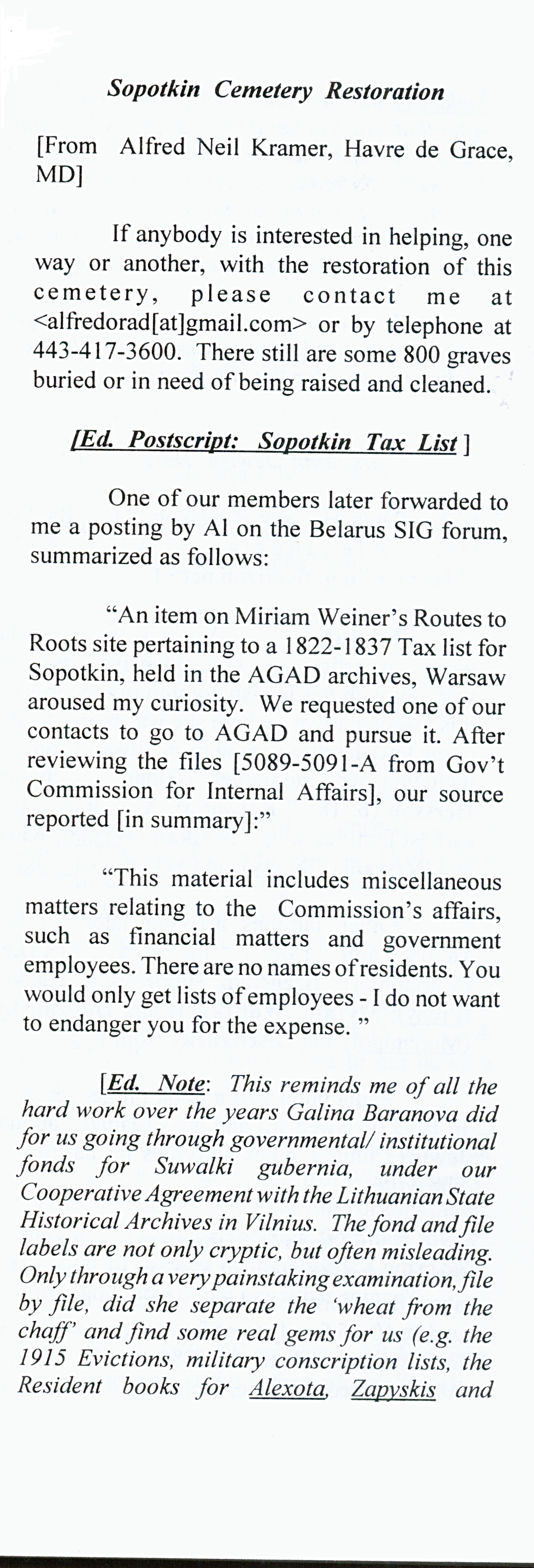
The following pages from Landsmen (2010) document the Sopotskin cemetery restoration effort. See also the Dartmouth Restoration Project for the full correspondence archive (2003–2005) from the Dartmouth Hillel & Dartmouth College cross-cultural service project.
Spelling Variants
The name of this town has been recorded in many different spellings across official documents, census records, and immigration papers. Known variants include: Sopockin, Sopotkin, Sopotskin, Sopochin, Sopochkinye, Sopoczin, Sopocekin, Soposkin, Soporkin (misspelled), Sopochani, Sopokina, Sopotkus, Sopoczkin, Sopockino, Sopochani, Sopokni, Sopoczkine, Sopokin, Sopodzkin, Sopotzky, Sopoken, Sopockinic, Soposzkin, Sopotskni, Sopotzky, Sopockinpow, Sopockinic, Sopotinico, Sopockine, Sopokinie, Sopotzkin, Sopockinski, Sapoczkin, Sapotkin, and possibly even other ways.